Faversham Life
Faversham Life
Words Nigel Morgan Photographs various
Arden’s House is a fine, imposing building that has dominated medieval Abbey Street for over 500 years. It is probably best known as the site of Thomas Arden’s murder which took place on a snowy February evening in 1551. The story was recorded in the play Arden of Faversham, which scandalised audiences with its tale of a wife’s infidelity and her conspiracy to murder her husband in his own home. Die he did, and she was executed in the most brutal manner – perhaps as a warning to other women. The dramatisation of the events has become an important play in the British theatre canon, still performed today. Although officially authorship is anonymous, many scholars believe that several of the leading playwrights of the day had their hand in its creation. Some even assert Shakespeare was the principal writer!
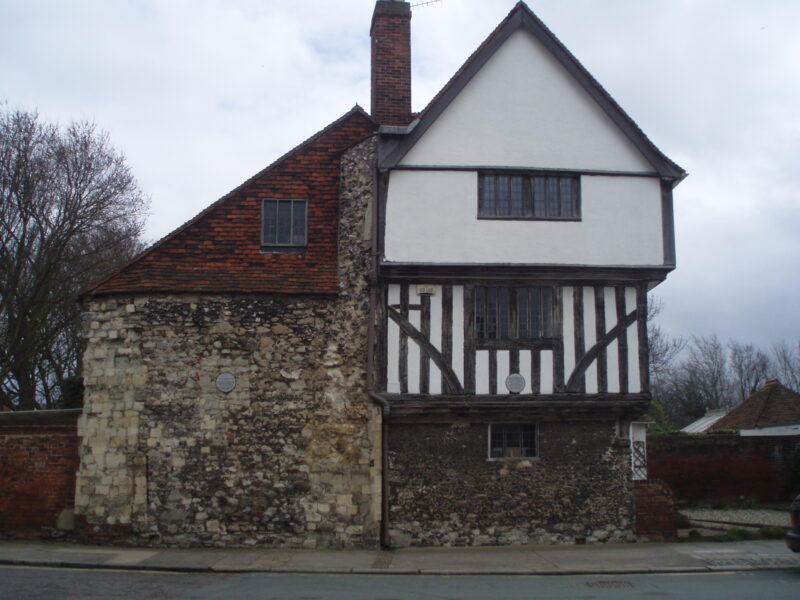
The Ardens arrived from East Anglia as beneficiaries of the dissolution of the monasteries in 1538, to move into the house that would one day bear their name. Although Thomas Arden became the town’s mayor and did some good for the town while in office, he was perceived as a selfish and ruthless moneygrabber in property matters. When his wife Alice fell in love with a local man, the plot for his removal was hatched.
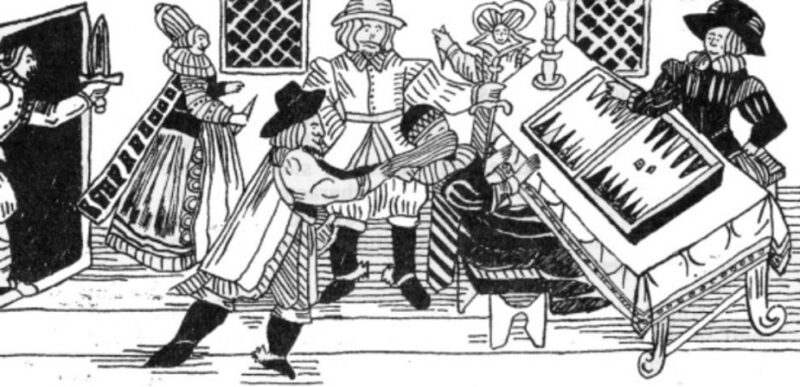
The 1633 illustration depicting the murder scene in Arden’s House. Arden appears to have been playing backgammon
The grisly story of his murder gripped the country, the tale told in scandalous chronicles of the time and as the subject of barroom ballads. The play followed. It had all the ingredients for success: it was well-written, topical, edgy and controversial. In later years, the story became the subject of a ballet, and more recently an opera.
Arden’s House was built in c 1495 as a guest house for visitors to Faversham Abbey, which had been built in c 1147 to be the final resting place of King Stephen and Queen Matilda, 350 years before. The Abbey’s growing importance meant it needed suitable accommodation for visiting high ranking clerics and government officials. So, in c 1495 a guest house was built (later to be called Arden’s House), grafted on to the side of the Abbey’s outer gatehouse (which had formerly hosted the town’s Portmote court). The interior was plush and it did indeed attract important visitors. Even after the Abbey’s dissolution, it is possible that William Wareham, Cardinal Wolsey, Thomas Cromwell, Richard Leyton and even Henry VIII all visited the house
Today Arden’s House is the Abbey’s only surviving residential building, and thus provides a marker for one of only a handful of English royal burial grounds in modern history.
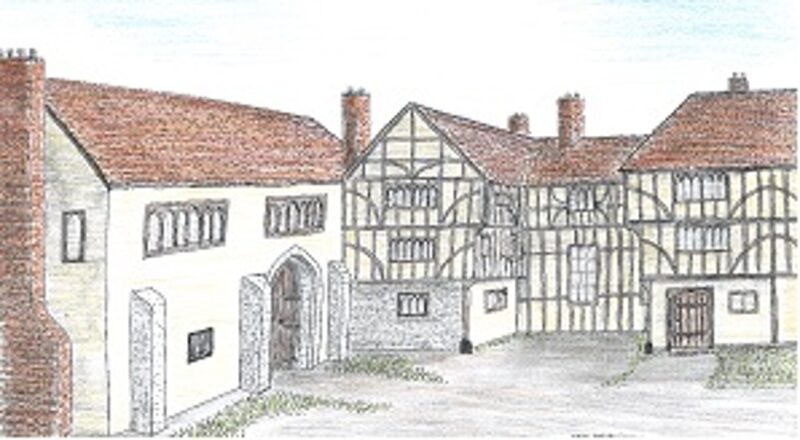
How the guest house may have looked in Arden’s time, adjoining the outer gatehouse and linked via a hall to what is today Arden’s Cottage which served as the main entrance to the property
After the downfall of the Abbey and the death of the Ardens, the house lost some of its prestige. Various sections were knocked down and it was leased as a farm house, known as the ‘Old Abbey’, remaining thus until the 1950s. Much of its fine interior was stripped out and sold off. Despite a degree of protection afforded by gaining a 2* listing, the house had become so dilapidated that a demolition order was served on 1 January 1957 to facilitate a widened roadway to the new grammar school.
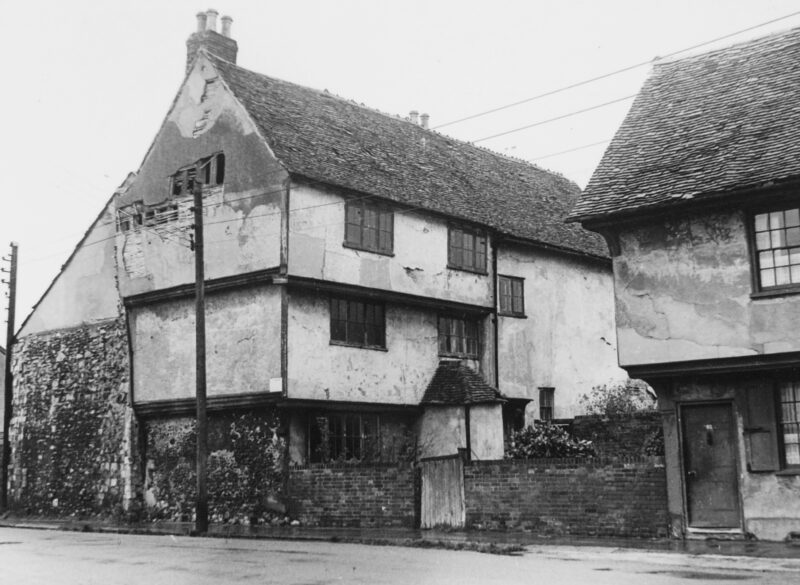
The house in poor condition in the mid-1950s
Yet within a week, an altruistic buyer had saved the house. And by chance, the government were offering restoration grants to 20 of the most threatened historic buildings of national importance. The Old Abbey gained one, on the condition that it would be opened to the public once refurbished. It was at this point that it was formally named ‘Arden’s House’. The success of the restoration in 1957 prompted the release of funding for the renovation of the rest of medieval Abbey Street, ensuring its legacy as one of the finest streets in the county.
The house met its condition to be opened to the public in various ways: serving as an antiques centre, a venue for Faversham Society parties, hosting historic tours, and opening for the town’s Open House and Secret Garden schemes. The garden has been the perfect venue for several stagings of the play, and many musical concerts have been held in the grand upstairs room.
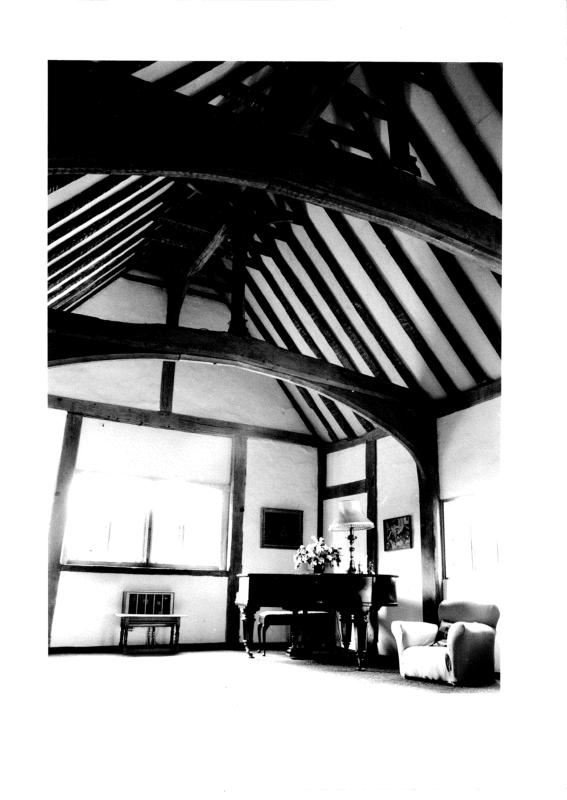
The upstairs concert room, complete with grand piano c 1980
That Arden’s House has survived is a miracle. After 400 years in the doldrums (70 years ago it was within a hair’s breadth of being tarmacked over) Arden’s House has survived – its cultural and historic value recognised and celebrated. Under the ownership of the Faversham Society, its public future should be secure for generations to come.
If you would like to read a detailed history of Arden’s House by this author, Dr Nigel Morgan, a Faversham Society Paper is available from the Visitors’ Centre in the Market Place.
Text: Nigel Morgan. Photographs: various