Faversham Life
Faversham Life
Words Declan Wiffen Photographs Various
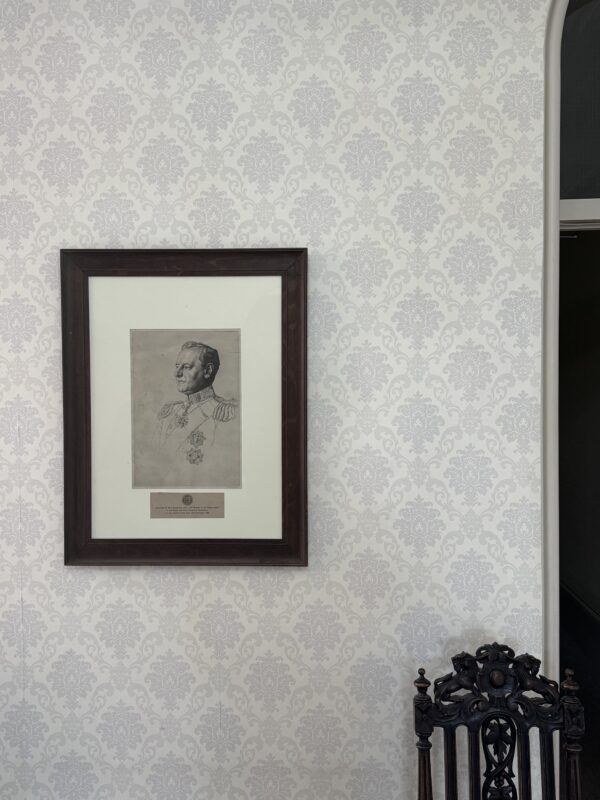
The portrait of William Lygon, 7th Earl Beauchamp as Lord Warden of the Cinque Ports by William Strang hanging in the Alexander Centre in Faversham
If you go up the staircase to the first floor in the Alexander Centre, on the landing to your right, there is a single portrait hanging against the damask wallpaper. Drawn in pencil, it depicts a man in a ceremonial military jacket with a high collar, fringed epaulettes, and impressively decorated with medals. It is in side profile and shows him looking off into the distance, his receding hairline and roman nose the defining features. Underneath the portrait is Faversham’s coat of arms with the three lions, and a description which reads: ‘Presented by Earl Beauchamp, KC Lord Warden of the Cinque Ports, to the Mayor and Town Council of Faversham, at the occasion of his visit, 14th November, 1920.’
Faversham has been a member of the Confederation of the Cinque Ports since the 13th Century when it was a significant trading port. Historically, this meant supplying ships and men to the Crown; by the 20th century, the role had become largely ceremonial. And one of the most important of these ceremonies is the installation in office at Dover of the Lord Warden of the Cinque Ports, a prestigious sinecure bestowed by the current monarchy to anyone of their choosing.
The British newspaper archives describe Beauchamp’s visit to Faversham in November 1920, when he attended a service at St Mary’s Church. We also discover that he came to hand out prizes at the National Fire Brigades Annual Tournament, held on the Mall Ground. But on these visits, Beauchamp did not know that he would, after his death, have another and very different connection to Faversham.
Madresfield Court, a large moated house in Malvern, was the family seat of the 7th Earl Beauchamp, William Lygon. Beauchamp was leader of the Liberal Party, a Governor of New South Wales, and Chancellor of The University of London. He was evidently a favourite of George V. As well as being made Lord Warden for most of his reign, 1913-1934, he was chosen to carry the Sword of State for the King’s coronation instead of his brother-in-law the 2nd Duke of Westminster (Hugh Grosvenor, a Tory who supported the Nazis and had an affair with Coco Chanel) – of whom more later. Married to Lady Lettice Grosvenor, sister to the Duke of Westminster, Beauchamp had seven children, and often stayed with his family at the Warden’s official Kent residence, Walmer Castle.
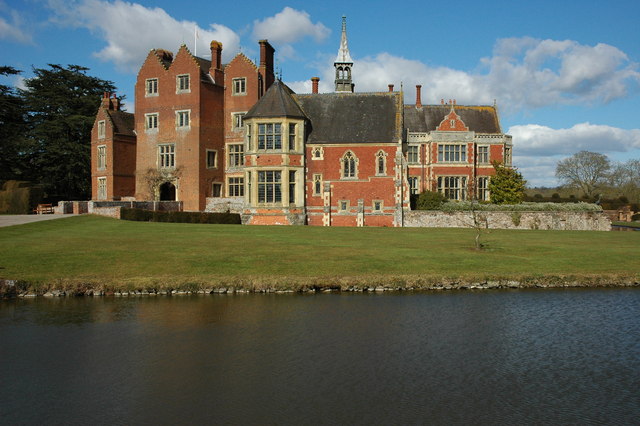
Madresfield Court, the Beauchamp family seat in Malvern
So far so normal for an earl in the early 20th century, but by 1931 Beauchamp’s life as a grand and respected aristocrat was over. He had a scandalous fall from grace and subsequent exile that became the inspiration for one of the 20th century’s best known novels, Brideshead Revisited. Evelyn Waugh knew the Lygon family from his friendship with Beauchamp’s handsome son Hugh at Oxford and visits to Madresfield, the model for Brideshead. It is easy to see the parallels: Waugh as Charles Ryder, the middle-class outsider who falls in love with the aristocratic life (and the aristocrat); Hugh Lygon, the beautiful younger son, the inspiration for Sebastian; Lord Marchmain shares the fate of Beauchamp, the aristocrat who falls from grace and is exiled – ‘The last case of someone being hounded out of society,’ as the character Anthony Blanche comments. Yet Lord Marchmain is exiled in Italy because of his affair with a middle class Italian woman named Cara, whereas Beauchamp’s faux pas was his fondness for a footman with a pleasing bottom – one of whom would become a well-known Faversham resident.
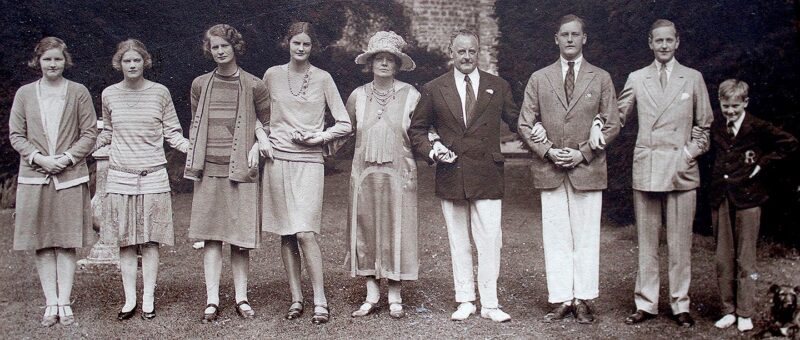
The Lygon family at Walmer Castle (English Heritage website, copyright unknown)
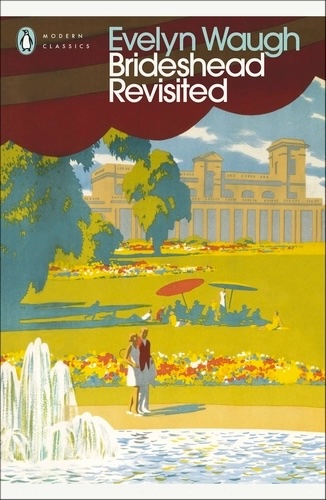
Brideshead Revisited was based on the Lygon family and Madresfield
Until his downfall in 1931, Beauchamp’s homosexuality had been a pretty open secret. In her book, Mad World: Evelyn Waugh and the Secrets of Brideshead, Paula Byrne writes: ‘Lord Beauchamp was said to have “exquisite taste in footmen”. When interviewing male staff he would pass his hands over their buttocks, making a similar hissing noise to that made by stable lads when rubbing their horse down. If the young men were handsome and pleasant, Beauchamp would remark: “He’ll do very well. Very nice indeed.” The fingers of the footmen of Madresfield were said to be glittering with diamonds. One could hear the clunk of the jewellery as they served dinner.’
There are various references to Beauchamp’s ‘misdemeanours’ in the diaries of the rich and famous from the 1900s. The novelist Hugh Walpole wrote to Virginia Woolf remarking that, while visiting the baths in Elephant and Castle, he saw ‘Beauchamp in the act with a boy’. The socialite Lord Lee of Fareham protested against Beauchamp’s giving out prizes at their children’s school on the grounds that he was ‘painfully cognizant of Beauchamp’s unsavoury moral reputation’. Stories about Beauchamp abound but often without traceable origins: queer history often survives on such gossip. One story tells of Harold Nicolson, the husband of Vita Sackville West and himself bisexual who, when dining at Madresfield, was asked by another guest whether or not Beauchamp had just said: ‘Je t’adore!’ to the butler. In a moment of panic and thinking quickly, Nicolson said it was nonsense; he believed he had said: ‘Shut the door!’ – covering for a fellow married man with a penchant for handsome men.
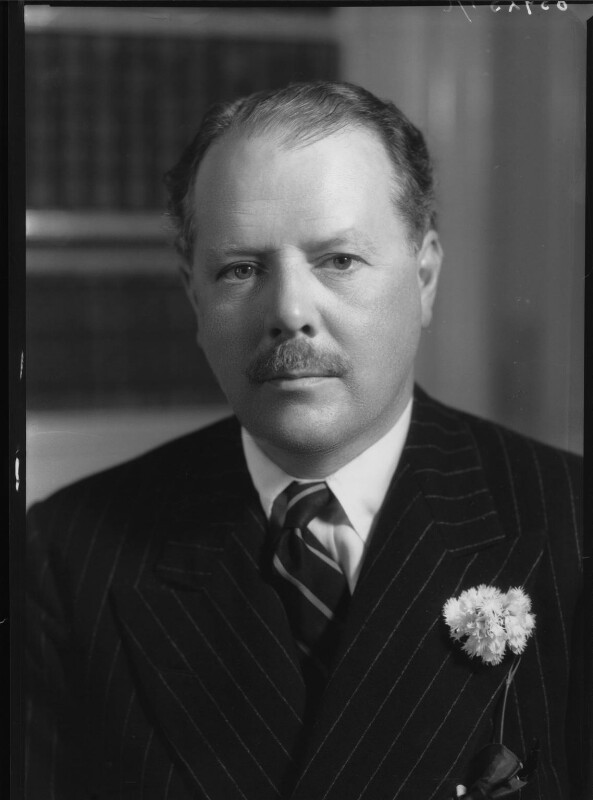
Harold Nicolson: Not ‘Je t’adore!’ but ‘Shut the door!’
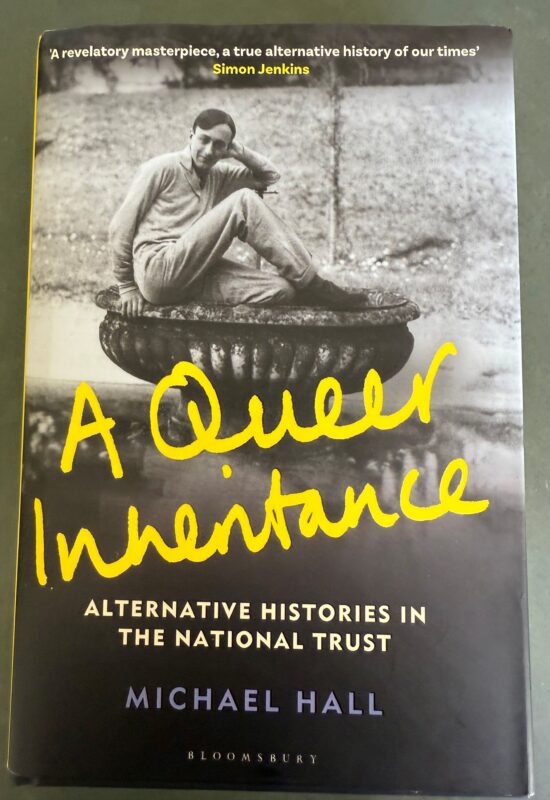
The recently published ‘A Queer Inheritance’ by Michael Hall, a fascinating insight to queer people associated with many properties of the National Trust including Knole, Sissinghurst and several others such as Kingston Lacy and Smallhythe
It’s said that Beauchamp used to throw parties at Walmer Castle for local Kentish men as well as prominent London homosexuals – although this is largely hearsay. There is however a mention of the actor Ernest Thesiger in Lady Christabel Aberconway’s memoirs. She writes: ‘One Sunday, my host Lord Jowitt, asked my husband if he and I would like to see one of the famous castles of the Cinque Ports. Delightedly we accepted…We arrived [at Walmer] and were shown into a garden surrounding a grass tennis court. There was the actor Ernest Thesiger, a friend of mine, nude to the waist and covered in pearls.’ Whatever their relationship, Thesiger and Beauchamp shared interests in embroidery, the Arts and Crafts movement, and were exhibited in the Masculine Needlework Exhibition held in London in 1931.
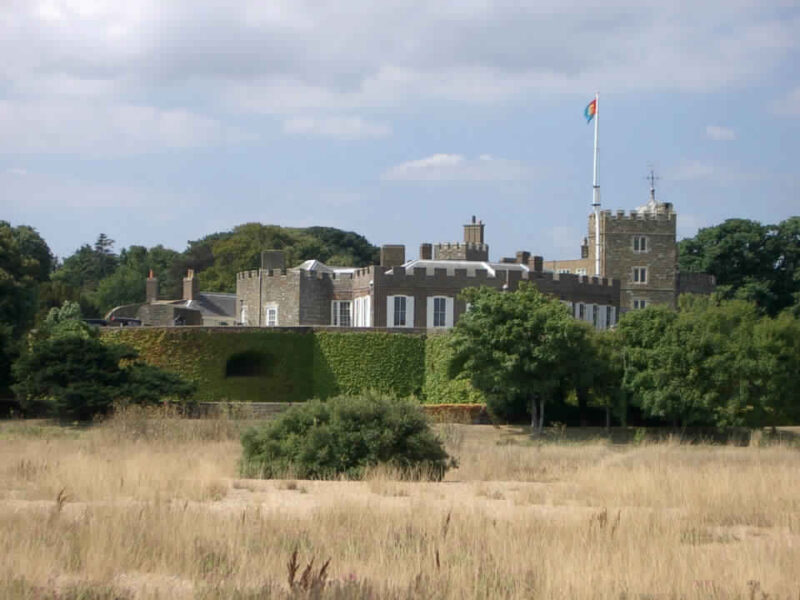
Walmer Castle (photo Charles Taylor)
Such behaviour outraged Beauchamp’s brother-in-law, the Duke of Westminster. As a divorced man, he had been barred from carrying the Sword of State at George V’s coronation, and the honour had gone to Beauchamp who seemed to flaunt his homosexuality. This smacked of hypocrisy and Westminster, infuriated and intensely envious, started to compile a dossier of evidence to present to his sister, Beauchamp’s wife, and the king, while Beauchamp was out of the country on a world tour in 1930. His sister was said to be initially rather confused about the concept of homosexuality, believing at first her husband was being accused of being a ‘bugler’.
The dossier no longer exists, but details of what he discovered can be found in the divorce papers Lady Beauchamp filed, which are held in The National Archive. Unfortunately for Beauchamp, there was ample evidence to prove that he had been sleeping with young men throughout his marriage, including many of his staff. Point six of the reasons listed for divorce was: ‘That throughout the married life at 13 Belgrave Square, Madresfield Court, and Walmer Castle…[Beauchamp] habitually committed acts of gross indecency with certain of his male servants, masturbating them with his mouth and hands and compelling them to masturbate him and lying upon them and masturbating between their legs.’ These acts, as well as various occasions of sodomy, were mostly found to be with his servants.
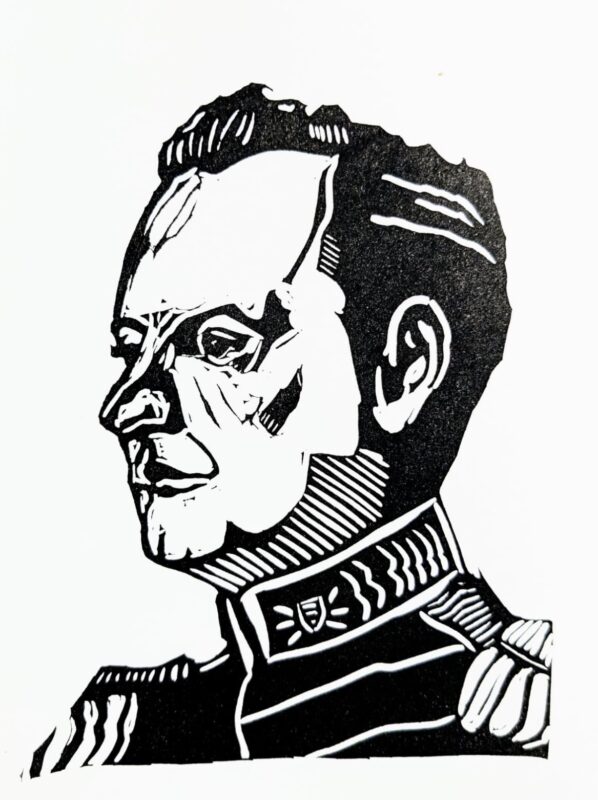
A linocut of Beauchamp by Tina Hagger, an artist in Faversham
When the Duke of Westminster (one can only imagine his delight) told George V in 1931, the king is reported to have said: ‘I thought men like that shot themselves.’ Because of the king’s close relationship with Beauchamp, and because of his desire to keep scandal away from the royal court – he feared that his son, Prince Georgie who had attended many parties at Madresfield, could become embroiled in a bisexual scandal through association – the king offered Beauchamp a deal to avoid a public scandal. He was to give up all his titles (he clung to Lord Warden until 1934), leave his wife and go into voluntary exile. Beauchamp accepted and took off, first for Europe, where it was reported he was taking ‘the mud cure’ for health reasons, and then to Australia, where he settled in Sydney for a time. When he left, the Duke of Westminster sent him a note: ‘Dear Bugger-in-law, you got what you deserved. Yours, Westminster.’
A young man, George Roberts, left with Beauchamp to exile. He had started work as second footman at Madresfield Court, and quickly rose to the position of valet, and then personal secretary. But George wasn’t just a servant – not only is he named in the divorce papers as one of Beauchamp’s paramours, but George became his lover and companion, travelling the world, and remaining at his side during much of his exile.
This is where we circle back to the queer history of Faversham. For later in life, after Beauchamp had died, George Roberts came to live in Faversham and set up as a seed merchant at Davington Priory.
I’ll write more about George and his life with Beauchamp in the next article.
But the next time you see an unassuming portrait hanging in an historic building, ask yourself what stories might be hidden in plain sight.
Text: Declan Wiffen, Photos: various