Faversham Life
Faversham Life
Words Matthew Hatchwell, Faversham Society trustee Photographs Matthew Hatchwell
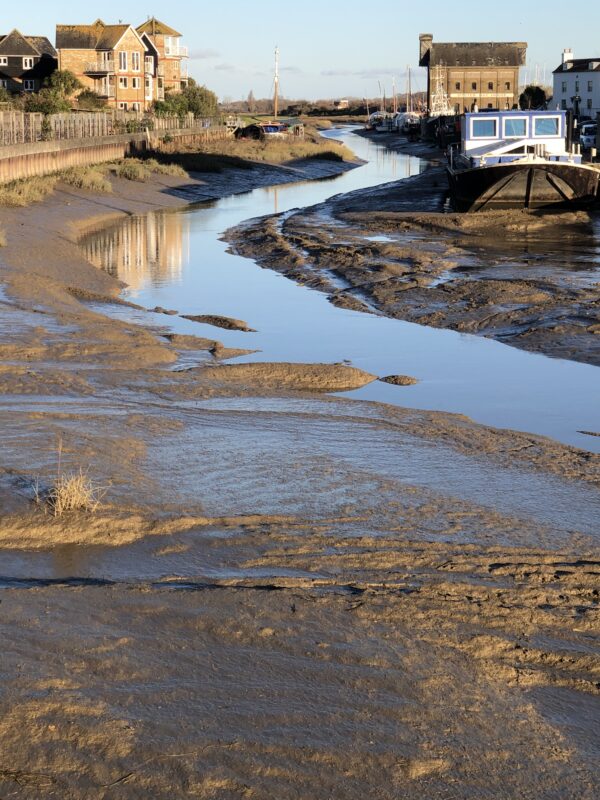
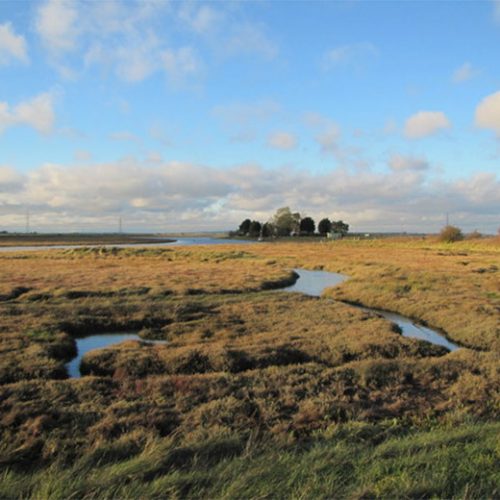
Faversham’s coastal location was key to its emergence as an important port and market town
Faversham’s story has always been shaped by the landscape in which it sits. Its position on the Thames Estuary coast, together with the marshes, chalk downs, streams and waterways that surround it, has influenced everything from the town’s history and architecture to its industries and way of life.
When the Faversham Society was founded in the 1960s, its main objective was to safeguard the town’s architectural heritage and the fabric of the buildings that were under threat at that time from ill-considered development initiatives. While those remain a serious concern today and therefore an ongoing priority, the Society has decided that, alongside protecting the town’s existing built heritage, it is important too to highlight the importance of the natural environment that helped create the town we know today.
At its April board meeting, the Society’s trustees agreed to make natural heritage a much bigger part of its work. The Faversham Society’s charitable aims already include helping people learn more about the geography and natural history of Faversham and the surrounding area, as well as protecting places that matter to the community. That includes treasured local landscapes such as Faversham Creek, the Westbrook, the coastal marshes and the internationally important wildlife of Oare Marshes, which attracts visitors from all over the country. The Swale is so important for migratory birds that it is part of a World Heritage nomination now being prepared by the RSPB and the UK government.
Faversham sits where two remarkable landscapes meet. To the south are the chalk hills of the Kent Downs National Landscape. To the north lies the Swale, one of the country’s most protected coastal environments, recognised internationally as a Ramsar wetland as well as a Site of Special Scientific Interest, Marine Conservation Zone and Special Protection Area.
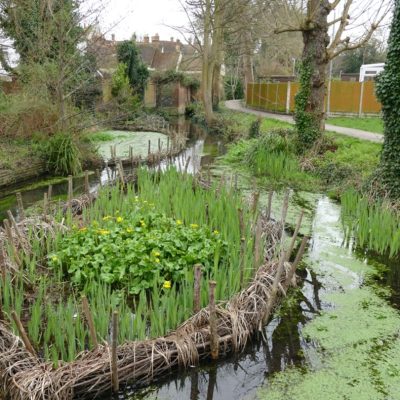
Connecting these landscapes are the chalk streams that flow from the Downs to the coast. There are only around 200 chalk streams in the world, which is why they are sometimes called ‘England’s rainforests’. One of them, the Westbrook, once powered the watermills that supported Faversham’s famous gunpowder industry.
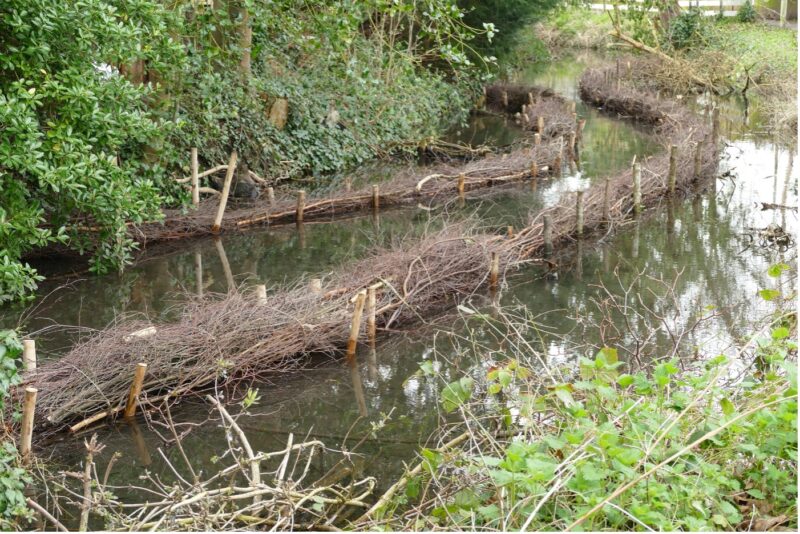
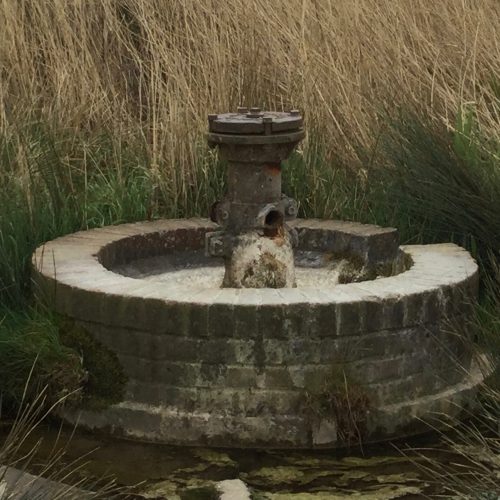
The Westbrook once drove the gunpowder mills that were a feature of the Faversham landscape for centuries
These streams were a vital resource for early settlers, providing a constant flow of clean, pure water at the same temperature all year round. During Roman times, many of the springs along this stretch of the north Kent coast became sites for villas and farms, taking advantage of the fertile soils that still support fruit farming today. The landscape continued shaping the town for centuries afterwards. Local clay and chalk were used to make the famous Kent stock bricks, and traces of old brickfields and chalk quarries can still be seen in the contours of modern Faversham.
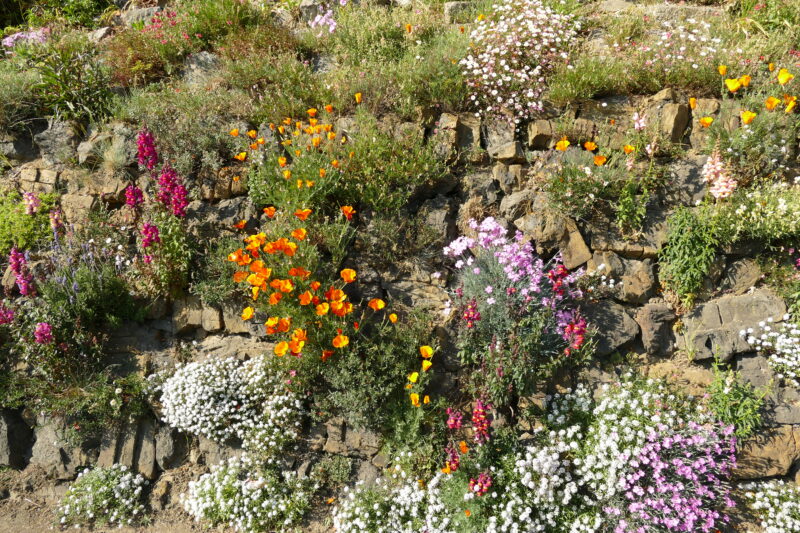
The fused and discarded bricks in Abel’s Acre are evidence of the town’s 19th-century brick-making heritage
The Swale also played a huge role in the town’s prosperity. Without it, Faversham’s brickmakers could never have reached Victorian London so readily by sailing barge along ancient coastal trade routes. In the 16th and 17th centuries, the town became one of England’s leading ports for wool exports to mainland Europe. Earlier still, it was a Cinque Port and an important shipbuilding centre thanks to the abundant timber in nearby woodland.
The natural environment around Faversham is not just historically important — it is ecologically extraordinary too. Salt marshes are among the most valuable ecosystems on earth, surpassed only by coral reefs and tropical rainforests in the benefits they provide to people and wildlife. In the Swale, work is underway to restore the seagrass beds that once covered much of the Thames Estuary and are home to a recovering population of short-snouted seahorses. Native oyster beds are also being restored. Oysters fed communities in north Kent for thousands of years and supported the Faversham Oyster Fishery Company, reputedly one of the oldest businesses in the world.
The marshes and waterways also provide habitat for the critically endangered European eel — once a staple food for local communities and now the world’s most illegally trafficked animal. No fish is as deeply woven into English and mainland European culture as the eel.
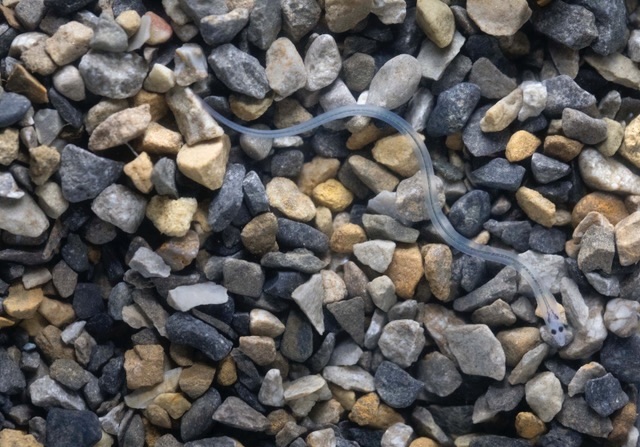
European eels — now critically endangered — have been a source of food for people in the north Kent landscape for millennia Photo: Sarah Cuttle
More conspicuously, seals are a familiar sight in the Swale, and along with porpoises occasionally make their way as far as Faversham’s tidal basin. Even mosquitoes have played a part in local history: until surprisingly recently, they spread malaria — or ‘marsh ague’ — across north Kent. Until the 19th century, the life expectancy of people living on the marshes was much shorter than that of communities on higher ground.
Today, this remarkable environment faces growing pressures. Rising sea levels linked to climate change threaten the coast, chalk streams are suffering from over-abstraction and pollution, and water quality is declining because of fertilisers, pesticides, road run-off and sewage discharges. These problems affect not only wildlife but also local communities and businesses, including Shepherd Neame, which relies on pure water from the chalk aquifer for brewing.
Because this natural heritage is such an important part of the town’s identity, in future it will be a bigger part of the Faversham Society’s work too. The Society’s new website, currently in development, will include information about the town’s natural environment. Future guided walks will explore wildlife and landscapes alongside history and architecture. The monthly newsletter will include articles focusing in detail on different aspects of Faversham’s natural history, and the Society is exploring opportunities to highlight our rich natural heritage through a permanent display in the town.
Text: Matthew Hatchwell. Photographs: Matthew Hatchwell
See previous related Faversham Life articles:
The Restoration of Westbrook Stream