Faversham Life
Faversham Life
Words Justin Croft Photographs Simon Shaw
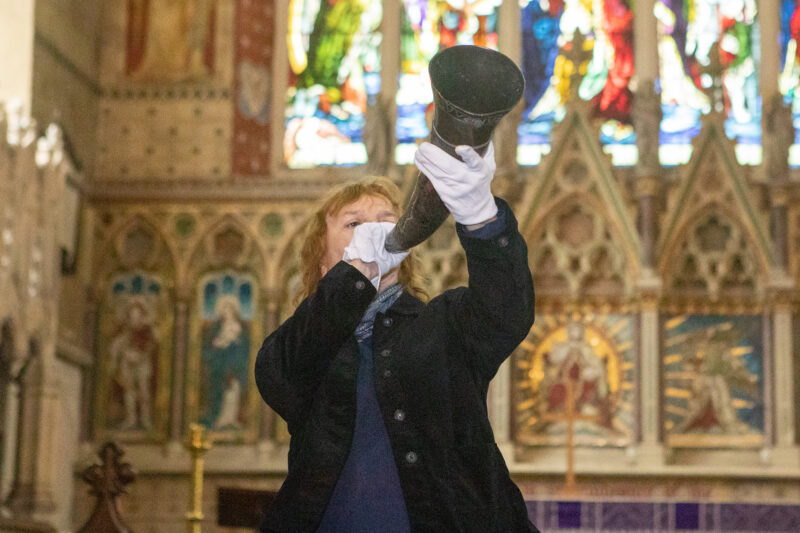
Sounding Faversham’s moot horn, 9 March, 2026
A charismatic and rather outlandish looking artefact, the horn was blown for hundreds of years to summon the people of Faversham to meetings of the council (‘Burghmote’), or to warn of fire or other dangers, or to announce a death in the town. As magnificent as the horn is to behold, I’ve always wondered what it would sound like. In the recent past, incoming mayors were encouraged to try to sound it, with mixed success, while the BBC’s Fiona Bruce made a brave attempt some years ago when the horn was shown to the Antiques Roadshow at Belmont House. It is on permanent display in the town as one of the highlights of the Faversham Charters and Magna Carta exhibition.
I was excited then to hear of a project orchestrated by a local musician, artist and composer, Dr Maureen Wolloshin, to sound the horn as a way of reimagining the sound world of the Middle Ages. More specifically, Maureen has long been interested in the anchorites and anchoresses (religious recluses) living in cells beside the parish church of Saint Mary of Charity before the Reformation. She tells me that pilgrims would have visited the anchoresses to pray, commune, and make offerings.
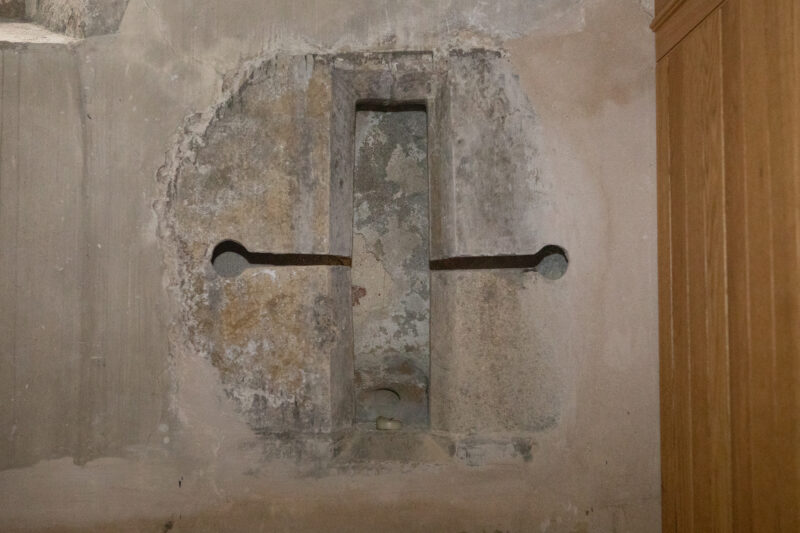
The cruciform ‘squint’ in the North transept of St Mary of Charity, Faversham
Being a musician, she is especially keen to imagine what sounds they would have heard from their cramped stone dwellings with tiny openings (‘squints’) into the church’s choir and transept. While blowing the moot horn may not have been an everyday occurrence in Faversham, we can be pretty sure that it was one of the sounds which would have reached the ears of an anchoress.
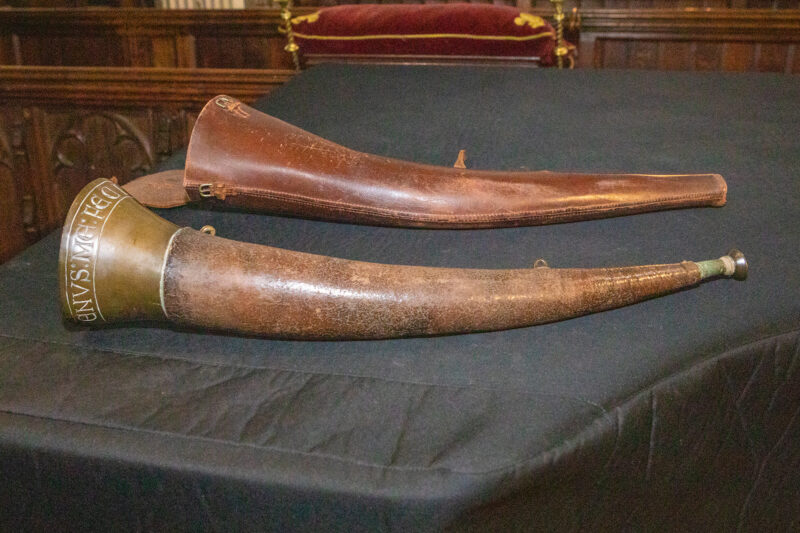
Faversham moot horn and its {modern) case
A date was set for Monday 9 March 2026 for the horn to be brought to the church and sounded by local brass player Kay Charlton (trumpeter with the Bollywood Brass Band). A thick mist had descended overnight and the town felt quiet, pale and colourless as I made my way to the church porch to witness the event. I was struck though by spring birdsong piercing the gloom, more prominent than the usual morning sounds of school-run traffic and the bleeps and squawks of reversing delivery vehicles. I imagine birdsong must have been among the most consistent sounds heard by a medieval anchoress in her stone cell.
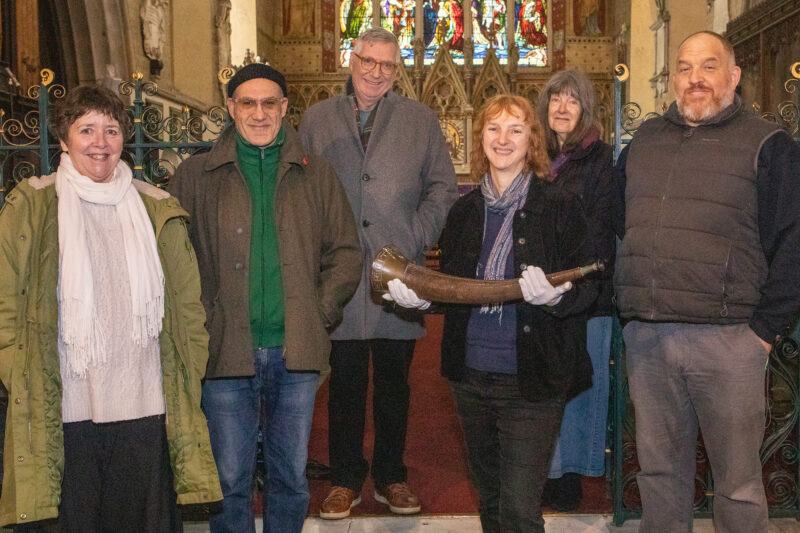
Maureen Wolloshin, Mike Eden, Simon Tyler, Kay Charlton, Patti Hicks Whaley and Stacey Woolf
In front of a small group recording and photographing the event. Kay Charlton raised the horn to her lips and immediately produced a long, low, booming sound. This thrilling note resonated deeply within the fabric of the church, the wood of the pews tangibly absorbing its vibration. A higher note (an octave above the first) provoked different vibrations; this time seeming to bring both metalwork and window glass alive. Then the horn was blown outside the church door.
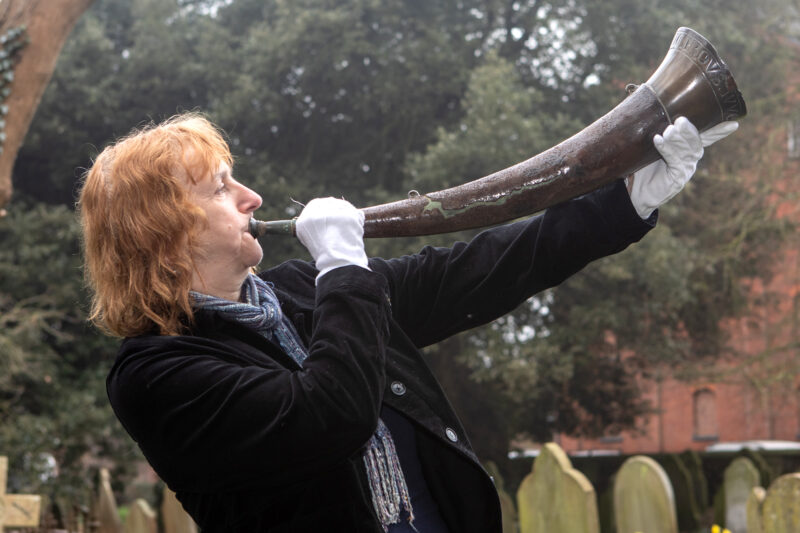
The moot horn blown in the churchyard of St Mary of Charity
This was always an outdoor instrument, so to hear it sing out across the churchyard was an extraordinary moment. Maureen later pointed out the strange effect of its sound seeming to grow louder the further one walked away from it, and we must credit its medieval maker for these powers of projection.
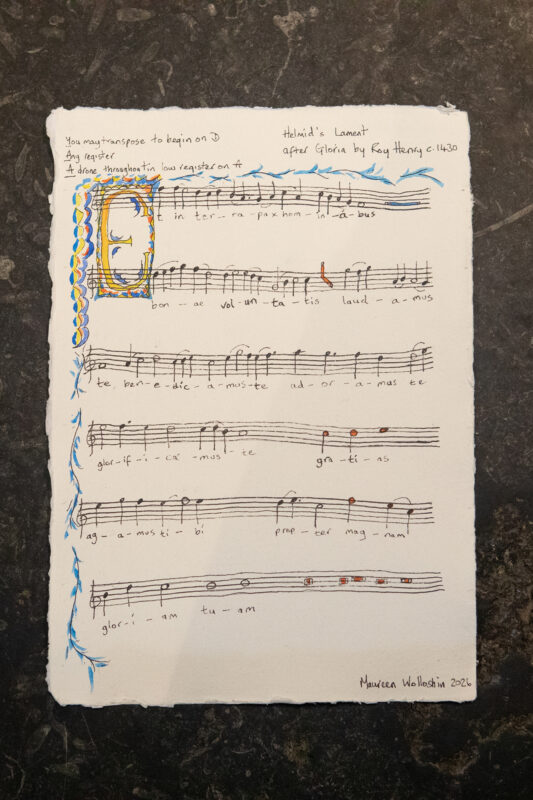
Music adapted by Maureen Wolloshin from the 15th century Old Hall Manuscript
Back inside the church, a further sound experiment took place, with organist Patti Hicks Whaley picking out a haunting line of a 15th century melody adapted from an original manuscript. According to Maureen, it was just the kind of tune that a medieval anchoress might have heard from her cell with its tiny opening into the church. Coupled with the notes of the horn and the birdsong in the churchyard trees the sound world of the medieval anchoress seemed suddenly very immediate.
Besides the pictures taken by Simon Shaw, Mike Eden was on hand to record each element of this recreation.
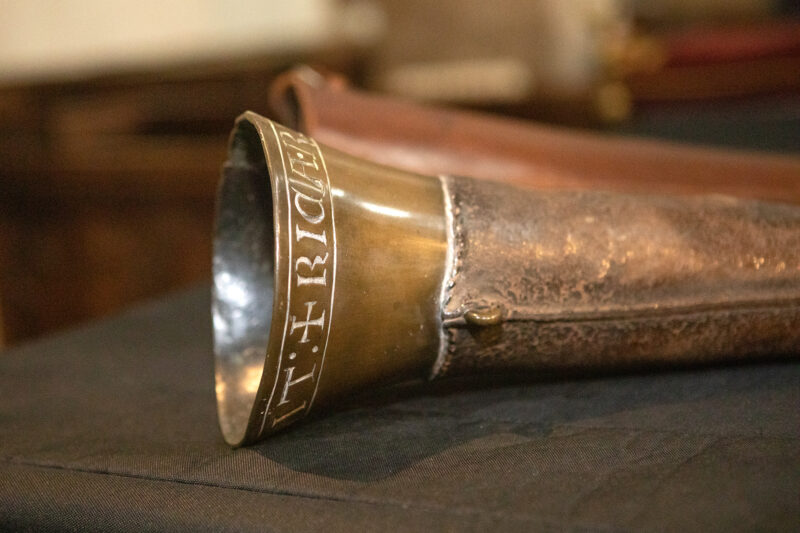
The Latin Moot horn inscription ‘Ricardus juvenus me fecit +’. (Richard the Younger made me)
Maureen Wolloshin reflects: ‘The whole experience for me was really quite profound because it brings together four of my interests; the agency of community in my work, ‘sounding’ with buildings and their ghosts, the ventriloquising of those ghosts on my own soundings, and the sound world an anchoress would have inhabited and contributed to. In this way, past anchoresses and others ventriloquised through contemporary musicians ― and they influence what is yet to come in the piece I’m creating.
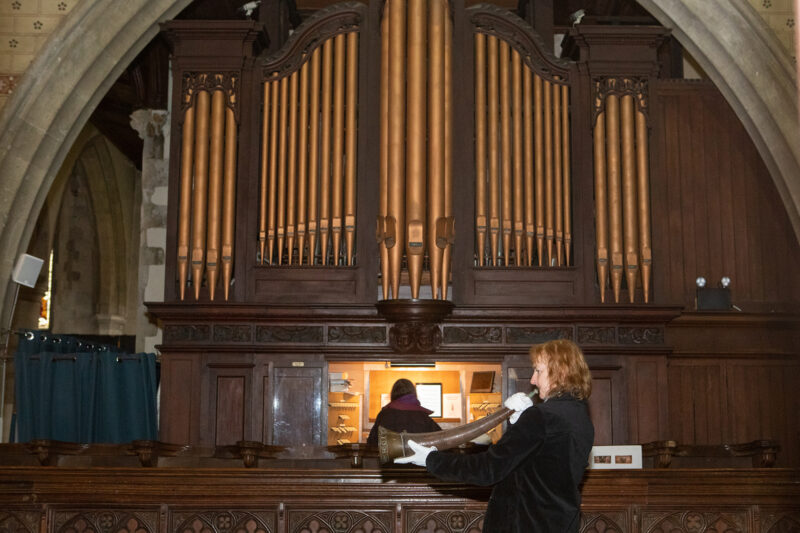
Moot horn and organ
‘To hear two women play organ and moot horn respectively, close to where the anchoress lived (a simple thing inaccessible for the women of the 15th century), to have them sounding a line very similar to those which would have been sung and played in St Mary of Charity at the time, and to have the privilege of working with so many people from our community in doing this in preparation for the piece I’m making is the very essence for me of what drives my work and fascinates me’.
Maureen will now weave sounds and images together to create an immersive audiovisual performance which will be premiered at the Hot Tin, Faversham on the 12 April 2026 (tickets here). It will be part of a larger project ‘Sound Emergence’ described as ‘a contemplative sound practice bringing together sound, heritage and community to create immersive listening experiences across Kent and beyond. They explore sound as a form of contemplation, deep listening, and collective gathering, working across art, music and history’.
Read more about the moot horn here
Text: Justin Croft
Images: Simon Shaw