Faversham Life
Faversham Life
Words Posy Gentles Photographs Neil Brown, Karen Louise George, Monica Lowe and others
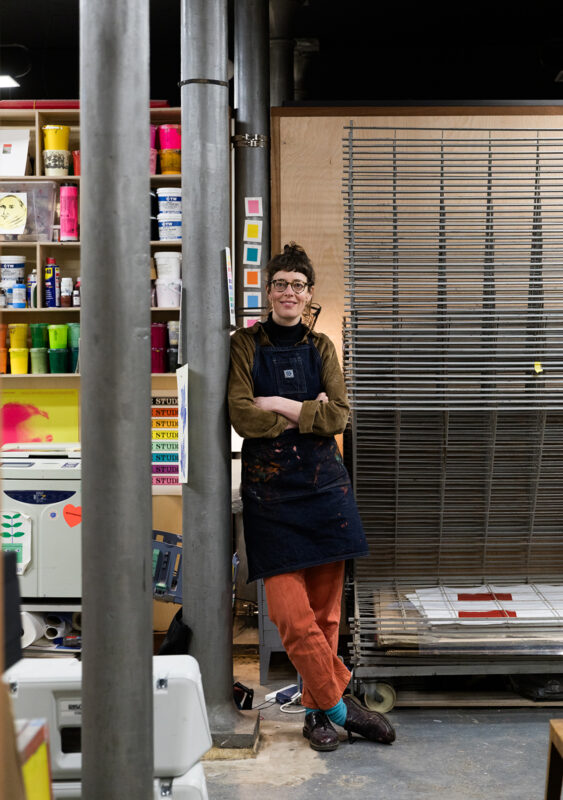
Sarah Simmonds of Goose Studio in Faversham
‘Printmaking is, in its nature and process, a collaborative act,’ says Sarah Simmonds who, in setting up Goose Studio in Faversham, has created something so singular that artists drive for hours and even leap on ferries to be part of it. Sarah says: ‘Working with artists and inviting people to my studio is very important to me.’
Goose Studio embraces community, education, collaboration, creative freedom and fine art. Sarah works with artists to create screenprinted fine art pieces, and has also created the Riso Club, making printing accessible to all. As well as an MA in Fine Art Printmaking from the Royal College of Art, Sarah has a background of workshops and teaching, and says: ‘I like the fact that in Goose Studio these two worlds come together.’
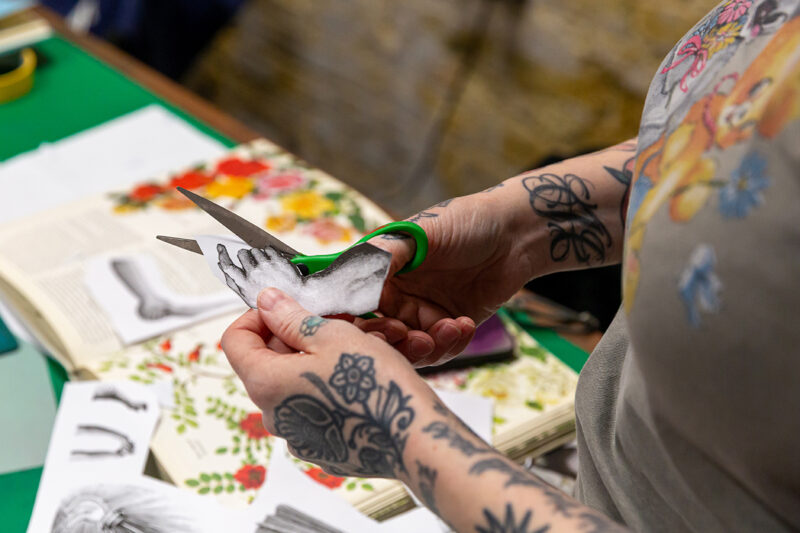
Heather Moore, Faversham tattoo artist and Riso Club member
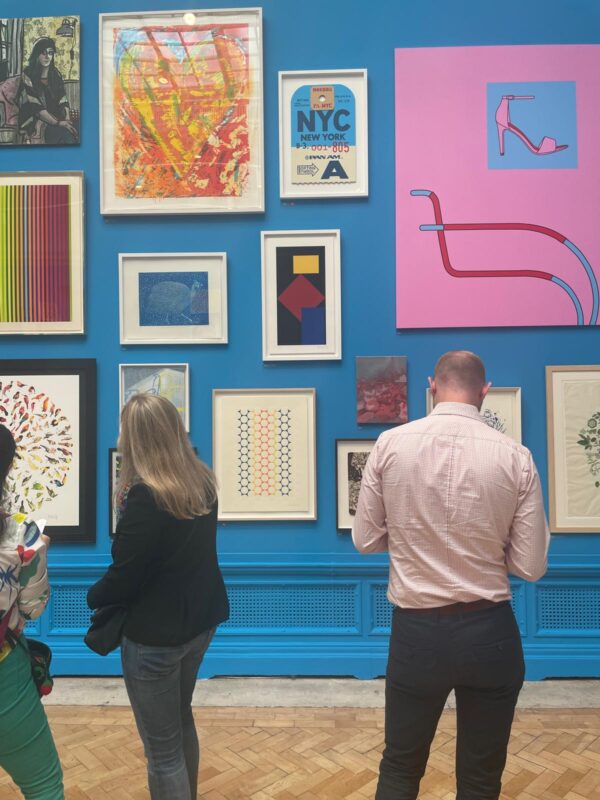
Guy Rutter’s ‘Sennen’ (centre bottom), printed by Sarah, at the 2024 Royal Academy Summer Show, where all 50 prints sold
Sarah is dyslexic and school was a chore, but she developed an interest in photography and printing processes in her engineer father’s dark room in their shed. At art college, she came into her own. After finishing her foundation year at KIAD in Maidstone, she applied to do a Fine Art Photography BA at Bournemouth. In the well-equipped print room, Sarah discovered her true passion was for printing, chucked photography and Bournemouth, and moved to Brighton University in 2007 where she took a BA in Fine Art Printmaking.
She went on to do her MA at the Royal College of Art, but before that, moved to Berlin for eight months, to print at the BBK Kulturwerk Printmaking Studio in the groovy Kreuzberg district. Sarah made flyers from abstract prints on newsprint paper by day and whirled around the city at night, pasting them on walls. It was in Berlin that the tiny seed of what was to become Goose Studio started to grow.
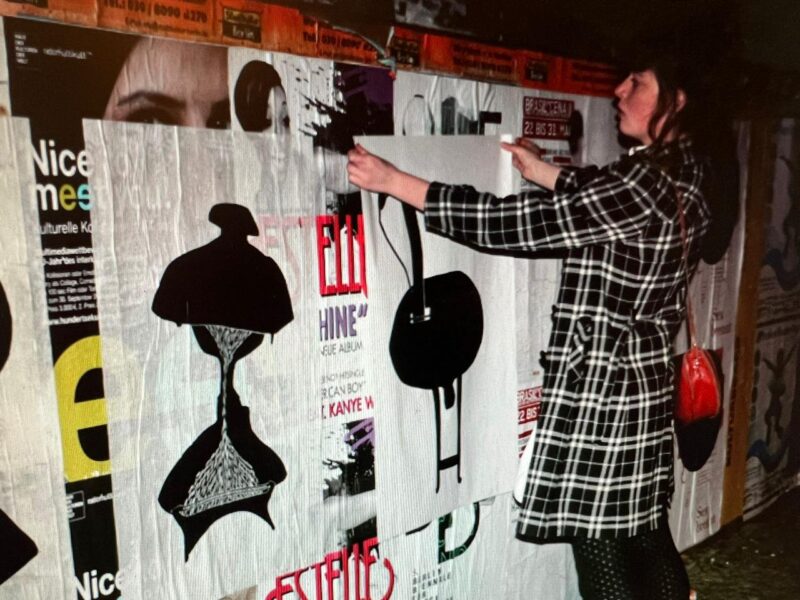
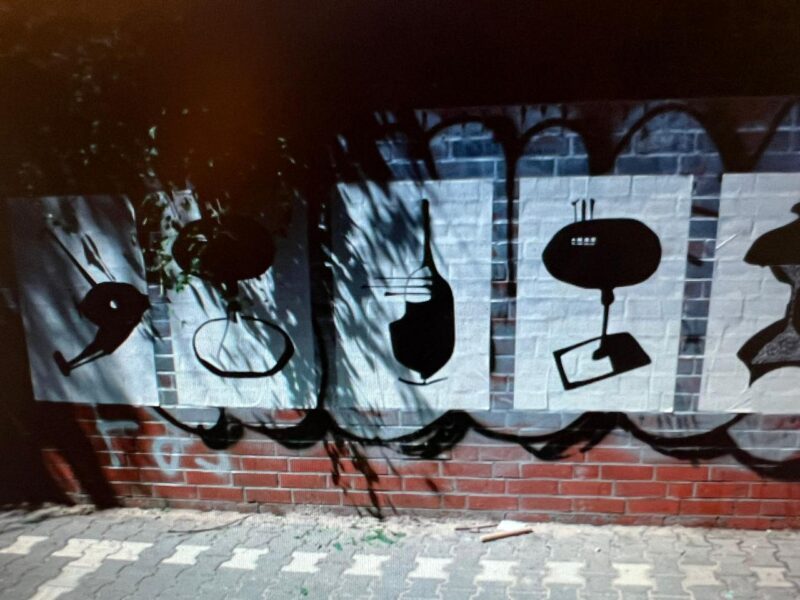
Sarah in Berlin: Printing by day and pasting by night
Sarah says: ‘It was a different way of living. I’d go every day with other international artists and we’d all print. There were different print rooms – the etching room, the screenprint room, the litho room – and every lunchtime we’d all sit down at one big table and have lunch together. It only cost about five euros, and you’d get a three-course meal and a coffee, even a glass of wine. We’d sit down for an hour and everyone had to down tools whether you were a technician, an artist, whoever, and we’d all sit together and talk.
‘Being an artist is often quite a solo pursuit. Apart from when you’re showing, there aren’t many opportunities to be part of a community. I really liked that communal aspect of BBK.’ Sarah wanted to recreate that with Goose Studio and started the Riso Club which meets every two weeks.
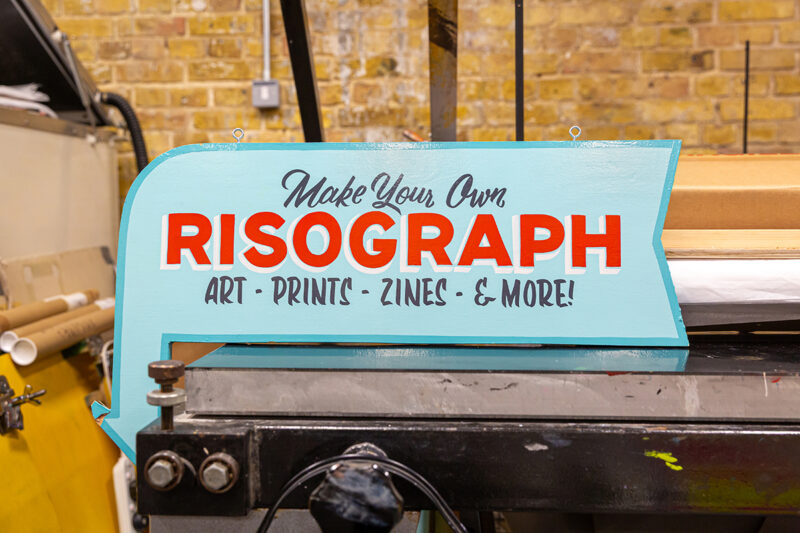
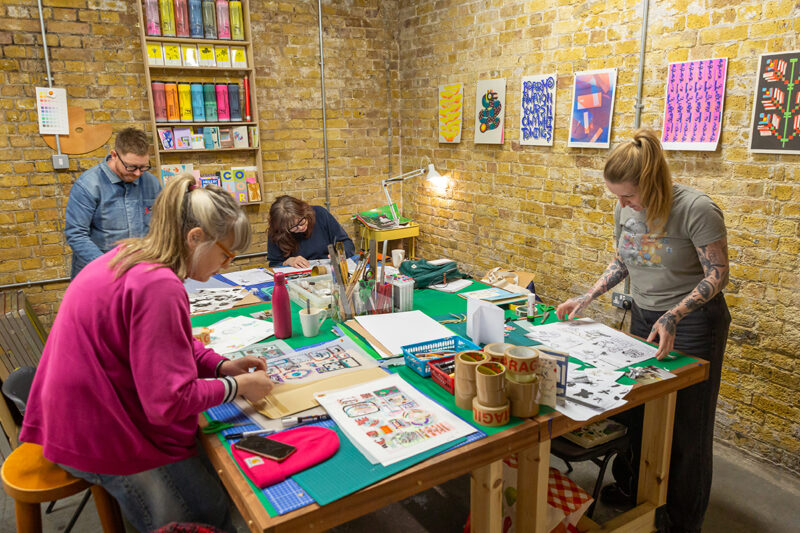
The Riso Club: (left to right) Zo Defferary, John Hogbin, Julia Woolf and Heather Moore
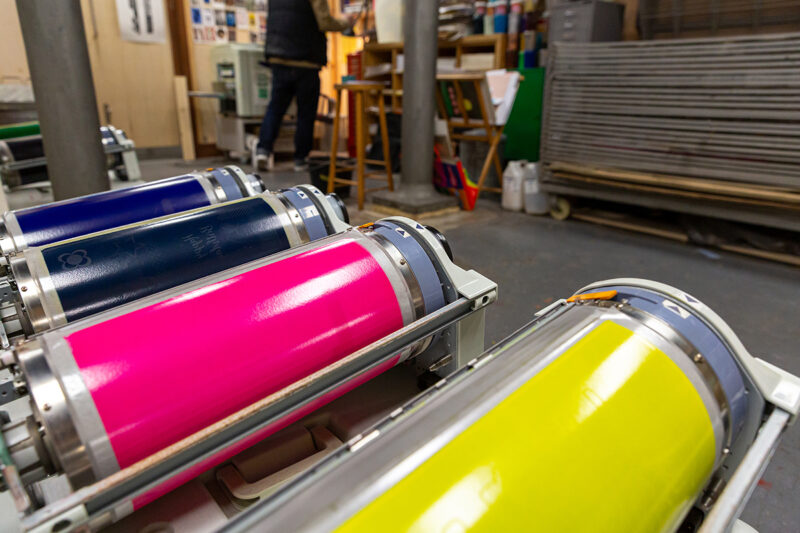
Drums of colour for the Risograph
Sarah says the Riso Club works because you can achieve something in an hour which would take two days with screenprinting: ‘It’s not labour intensive like screenprinting. You can test out an idea very quickly and its limitations offer a refreshing creative framework.’ After baulking initially at the misregistration and marks that are so typical of Riso printing, Sarah started to see it as an important part of the collaborative process.
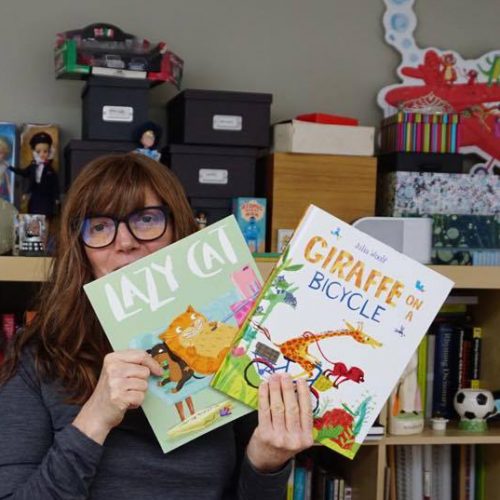
The video below of the Risograph printer in action, was made by Julia Woolf who is illustrating and producing the book My First Garden written by Posy Gentles.
Its affordability and speed made Riso printing the perfect medium for Sarah to set up a community group. Goose Studio offers courses in Riso printing, after which you can join the Riso Club to pursue your own creative vision. Sarah says: ‘It’s a real niche. Not many studios are doing what I’m doing with the club. I didn’t want just to offer a printing service. I wanted the artists to be there learning how to use the equipment and to share it that way. I’m not interested in it if they send me their files and I print them. That’s boring for me with the Riso because then I’m just a printer not an artist.’
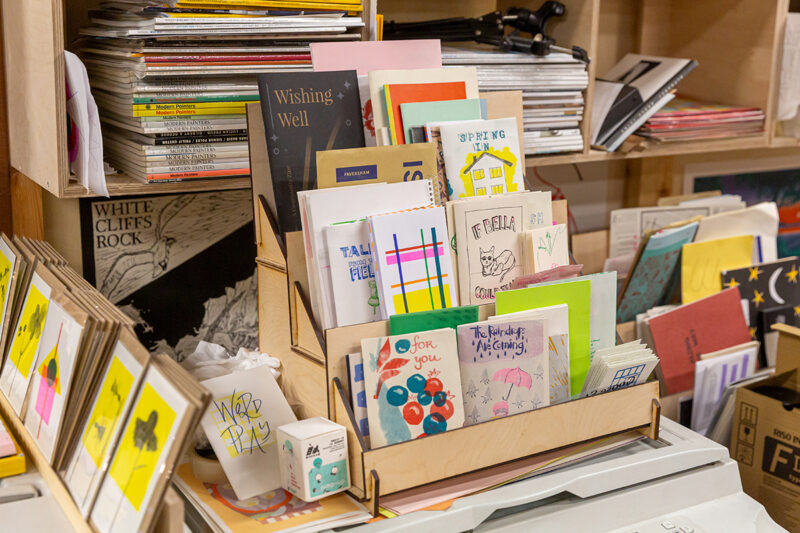
Made with the Goose Studio Risograph
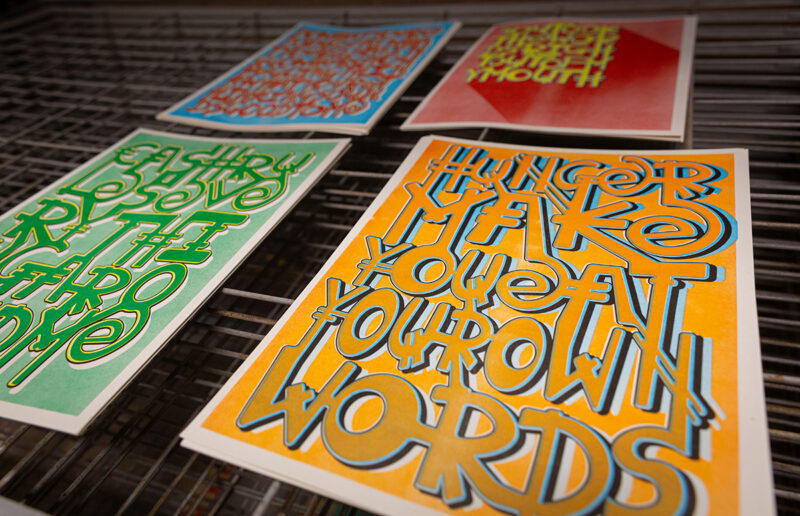
Risograph work by Lee Ben Gould
The Riso club started because some people kept coming back to do the Riso Beginners Course again, so they could use the Riso printer. The club includes all different levels – some are making birthday cards while others are building an entire portfolio of work.
Risograph printers arrived from Japan in the 1980s, as a cheap means of duplicating and printing and were often used by schools, political parties or marginalised groups. Sarah says: ‘It was an affordable way of disseminating a message.’ Riso is often used by artists making zines but has been generally snubbed by the art world at large until recently.
‘Attitudes are changing,’ says Sarah. The RCA now has a Riso printer in its art department and, in the Royal Academy Summer Show last year, I saw Risograph prints being selected and sold for hundreds of pounds. There’s a big shift there.’
Collaboration is fundamental to Goose Studio. Sarah had something of a revelation when she did a residency in India in collaboration with a local women’s self help group. Sarah says: ‘I screenprinted lovely patterns on to cloth, then the women sewed the garments together.’ When she saw the finished garments, she was initially aghast. ‘They had used edges where the print had stopped and they’d drawn pencil marks and lines, and chosen buttons I wouldn’t have chosen. It wasn’t at all what I intended. But it was really refreshing – it was the first time, if unintentionally, I had really collaborated with someone, and I realised what collaboration is. It’s not you completely controlling it. It’s not your creative baby. You’re sharing it with someone. Print making teaches that a lot.’
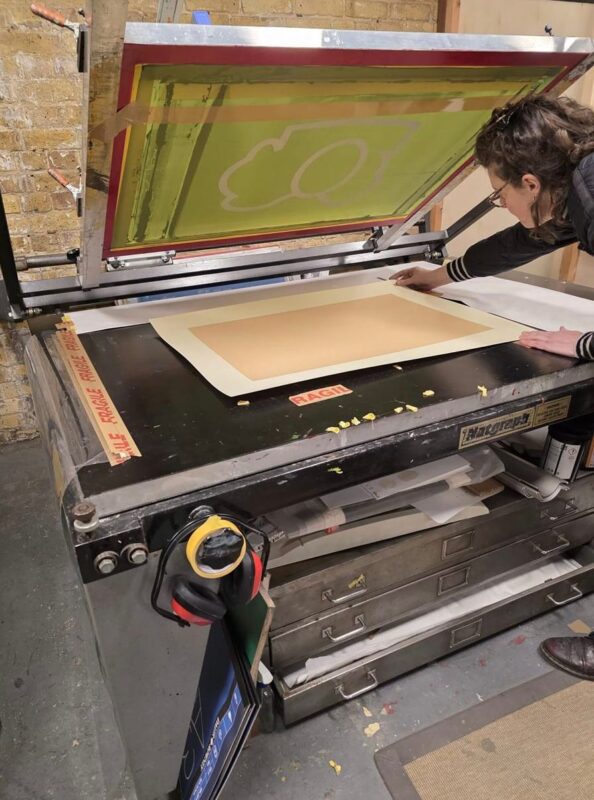
Sarah screenprinting for Jeff Lowe
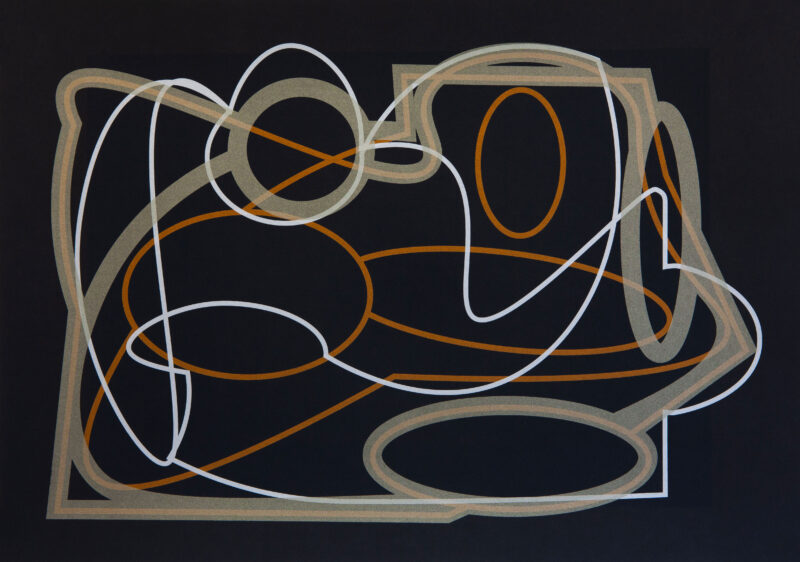
One Last More. Print by Jeff Lowe
At Goose Studio, Sarah regularly works with artists living locally who embrace the printing process itself as part of the creation. Sarah says: ‘My screen printing table isn’t fully mechanised. I still have to physically press that print through the holes in the mesh to get the ink on to the the paper underneath. It’s a little bit like a dance, you have to dance your way around the studio – there’s something really beautiful about that.’ Because each pull might vary slightly, the prints may also vary slightly. Sarah says: ‘The prints are like non-identical twins. I’m definitely celebrating the handmade.’
She works with sculptor and printmaker Jeff Lowe in the studio most weeks and says: ‘Jeff works intuitively – there’s no plan. We don’t have a clue what the outcome’s going to be. He works organically, deciding on the colours and shapes on the day. All the tools are there and the screens are ready, but he makes decisions as he sees them.’
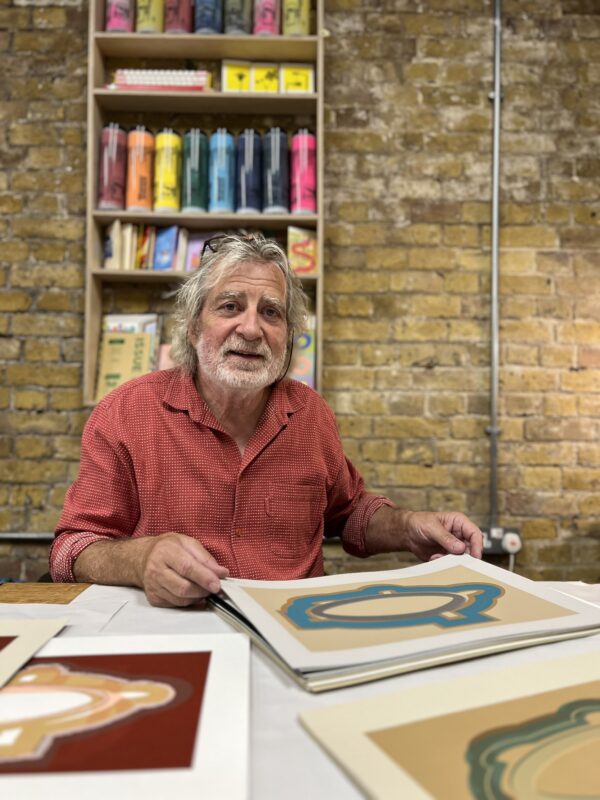
Jeff Lowe in Goose Studios
Jeff Lowe says: ‘I’m there to develop things and learn things through the making. I want to produce something at the end of it but it’s not something I know about. We have eight to ten silk screens, each with one or two images. We work in layers and I have no preconceived idea of the order or the colours.’
Sarah also works closely with artist Guy Rutter, helping him produce work for the RA Summer Show. ‘Guy’s very involved in the process. To begin with, I was rather apprehensive about working with the artists, but now I’m glad they’re there. I’m human and sometimes make mistakes, but sometimes they’re happy accidents.’
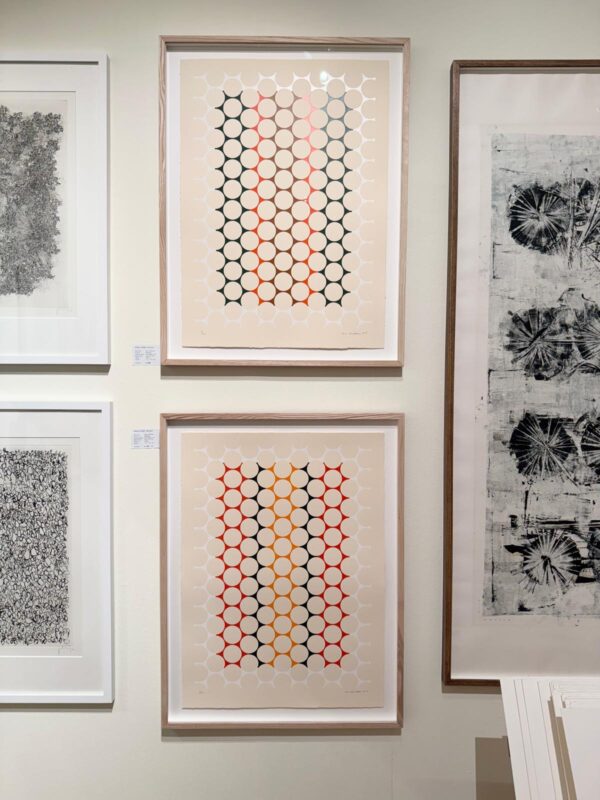
Sennen. Print by Guy Rutter
Faversham’s reputation as a town of artistic interest has been steadily growing, but the opening of Goose Studio here was mere chance.
After graduating from the RCA, Sarah was faced with the prospect of surviving in London. Setting up a printroom with its demands of space and financial investment was impossible, so she set up the Portable Print Studio which she carried in the back of her yellow Renault Kangoo to community workshops, corporate clients and institutions like the Tate and the Barbican. She also took on some teaching.
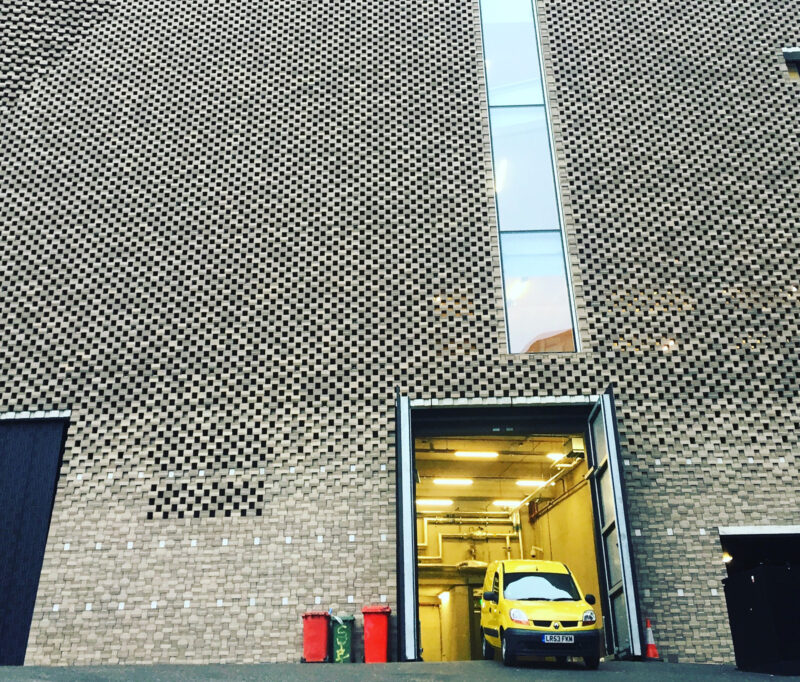
Sarah’s yellow Renault Kangoo, carrying the Portable Print Studio at Tate Modern
As Sarah loaded equipment in and out of the Kangoo, the idea of looking for a place to have a static printing studio became more and more appealing.
Spain, not Faversham, was her first choice. She and her partner Frank set off to the hills above Barcelona but a recurrence of Frank’s bowel cancer brought them back to the UK – ‘We needed the NHS’ – and they had to stay.
A friend from Brighton University suggested Faversham and, on a grim December day with needle-sharp rain slanting sideways, Sarah and Frank arrived to stay at The Sun Inn.
Sarah says: ‘It was crazy we hadn’t been to Faversham before, as Frank came from West Kent and I grew up in West Malling. We stayed in The Sun and walked out to The Shipwrights Arms. It was bleak in every possible way, but still really charming. And we thought, if this is the worst day and we both still really like it, what’s it going to be like on its best day. That was it really.’
They happily abandoned their expensive one-bedroom flat in Deptford, and rented a house on Brent Hill and an allotment at Stonebridge pond. They were delighted: ‘There were foxes and a heron, and swans would nest right next to our plot.’ That was in 2019. Sarah opened Goose Studio at Creek Creative in January 2020 and barely two months later, lockdown happened, and it was a year before classes could start.
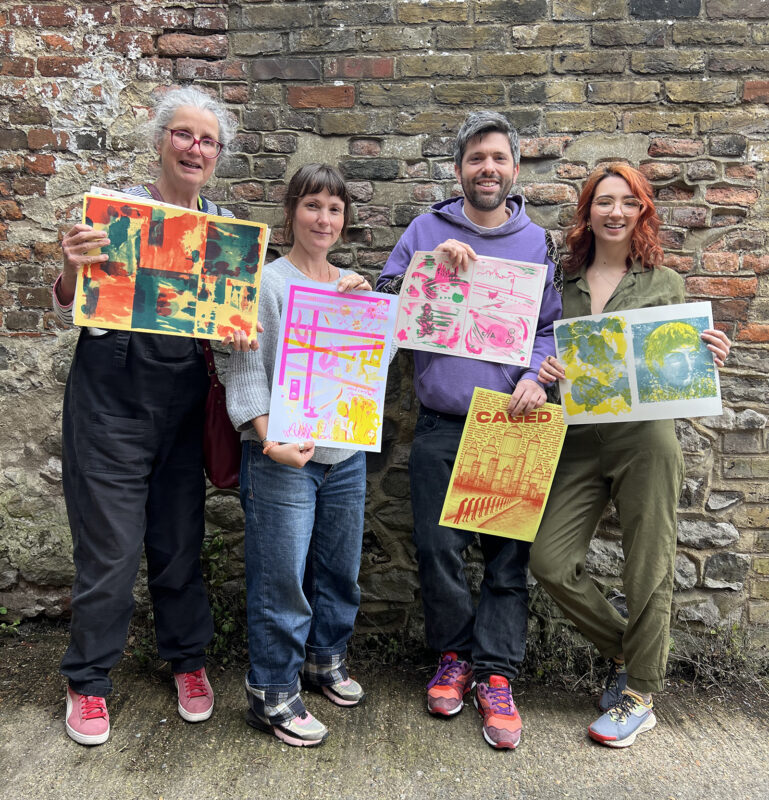
Riso Club members
Sarah says: ‘I was a bit ignorant when I came to Faversham from London. I thought I’d left the cultural hub and genuinely worried there wouldn’t be any one here who was interested – but the artists just keep coming, and my courses sell out.
‘I love that about Faversham. There are so many artists working away behind closed doors in this town – and there are still more I’m discovering now after five or six years. Faversham’s different from the rest of Kent. I still wonder how did I never come here as a kid? How didn’t I know about this place?’
Her ambitions for the future of Goose Studio will ensure that artists keep being drawn here. Sarah says: ‘I’ve got this drive which means I have to keep going. I’m always thinking about the next few years.’ She plans to keep pushing the fine art printmaking, would like to make editions and set up an online print shop. She is keeping an archive of printers’ proofs.
After the success of the Riso Club, she aims to open up the studio for a screenprint club, and would also like set up an artist’s residency in Faversham. ‘It’s a really inspiring town,’ she says. ‘I love the market three days a week, the amazing landscape, the marshes and the flatness. It’s close to London, yet you can walk out into nature.’
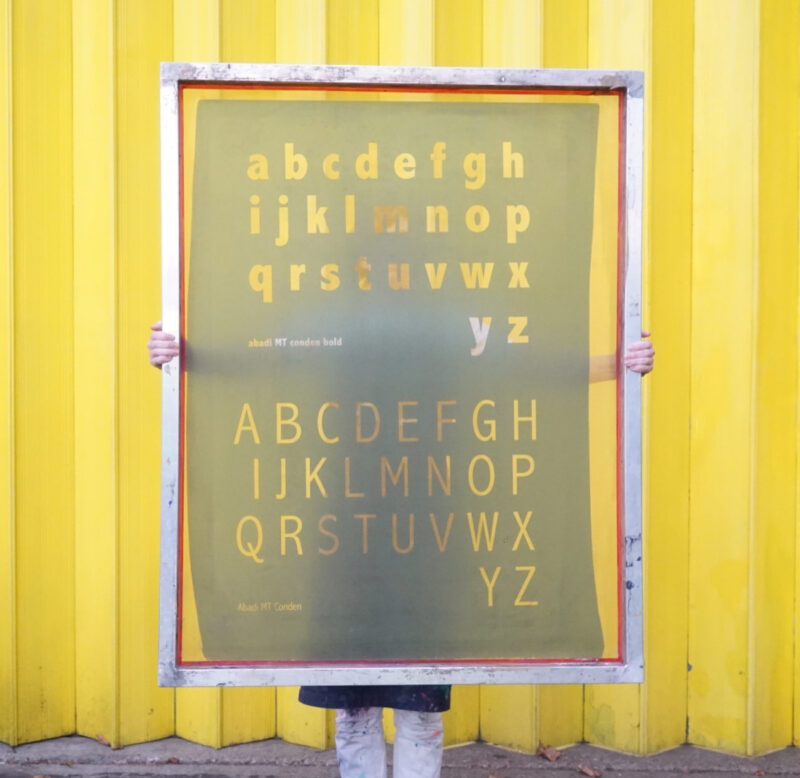
Sarah holding up a silk screen
Sarah’s boundless energy will eventually see her using the studio to make her own work. With two children under four, and her work with Goose Studio, Sarah has put her own work to one side for now. Meeting Rose Wylie, the Newnham artist who at 91 currently has a major solo show at The Royal Academy, has uplifted and inspired her.
Sarah says: ‘Rose put her practice on hold while she had children and that really encouraged me to think that I can pursue my own personal creative career later. It’s always been thought you can’t have children and be an artist, but Rose has shown that you can. I’m always thinking about making, even when I’m not. It’s a part of me, I can’t not be it. There is time for me still even if I’m 70 when it happens. I know I’ll never stop doing what I do till I die because it’s what feeds me. It’s what I get up for.’
Text: Posy Gentles. Photography: Neil Brown, Karen Louise George, Monica Lowe and others
For information about Goose Studio, click here