Faversham Life
Faversham Life
Words Justin Croft Photographs Justin Croft
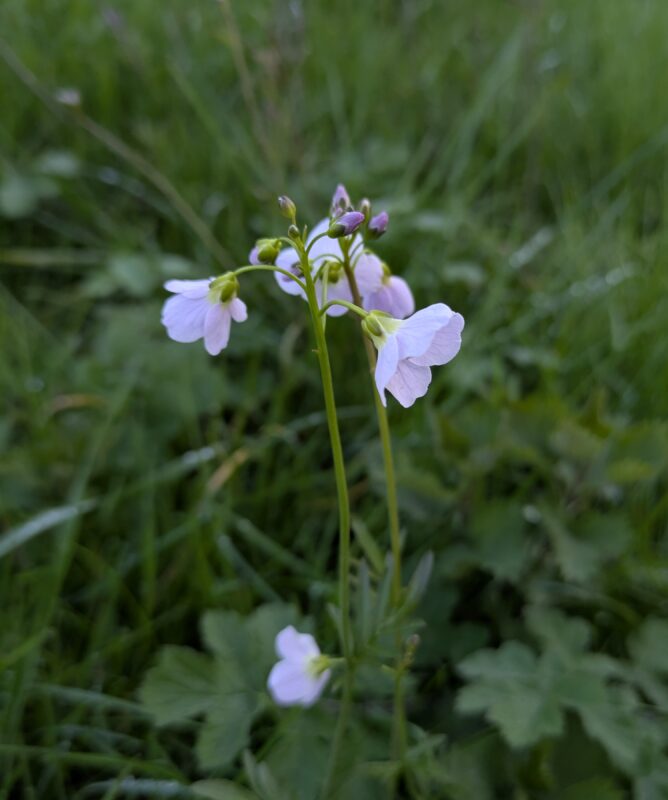
Lady’s Smock. Stalisfield. March 28 2026.
Lady’s Smock or Cuckoo Flower is always an early starter among spring flowers, with delicate lilac blooms looking fragile against dewy morning grass. A fine patch of this delightful plant appears each year on a triangular site where three roads meet just below Stalisfield church. Blooming in late March, it’s an uplifting sight, especially in early-morning light.
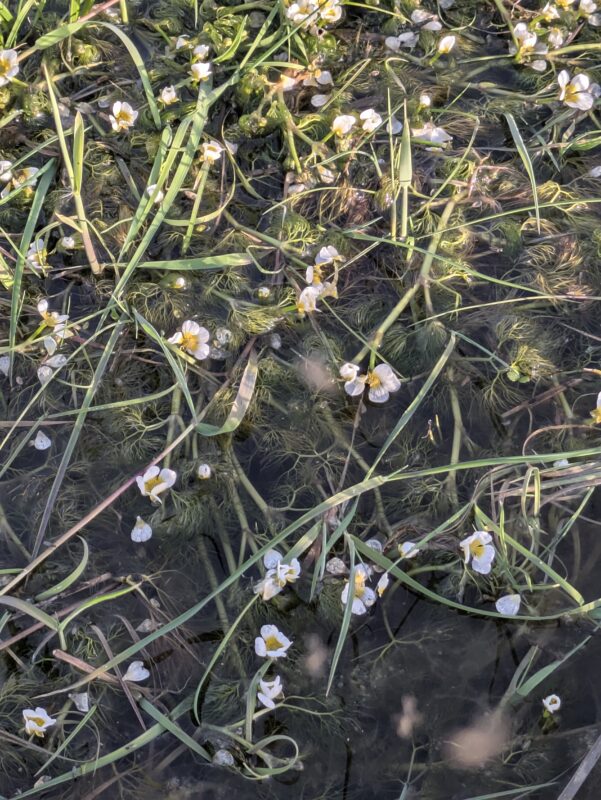
Water-Crowfoot. Ham Marshes, Faversham. April 8 2026.
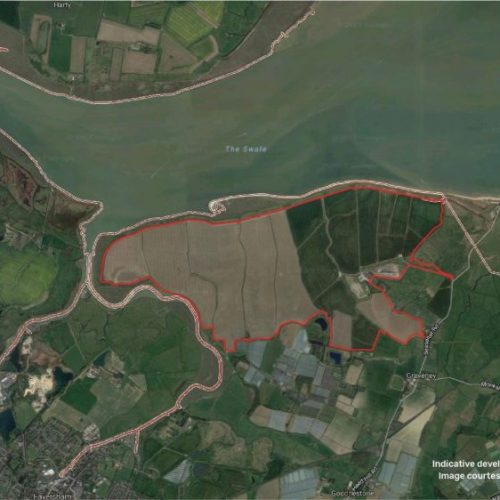
The watery ground of Ham Marshes is a precious natural environment under threat. Slightly away from the proposed housing development grow dense colonies of Water-Crowfoot in the dykes and ditches close to the Shipwright’s Arms. Patterns of white flowers with yellow centres sparkle among the thickly entangled threads of leaves, which thrive both above and below the water surface. As we found out, photographing them runs the risk of sliding feet-first into the marsh
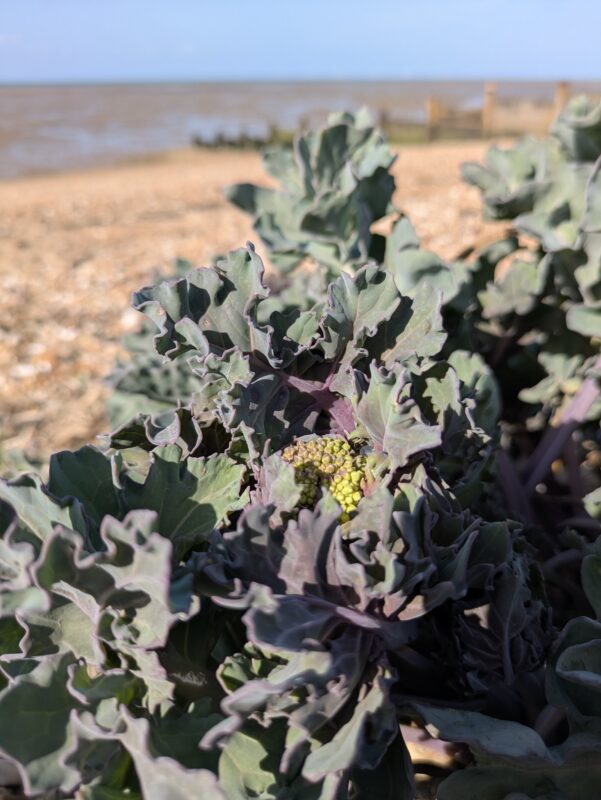
Sea Kale. Seasalter. April 12 2026.
Along the coast, the shingle beaches of Seasalter and Whitstable have produced excellent showings of Sea Kale which stand out proudly against the grey waters of the Thames Estuary. The flower buds were once harvested as a nutritious vegetable. In 1799, a London botanist, William Curtis, was offering sea-kale seeds for sale and published a book, Directions for cultivating the Crambe maritima, or Sea Kale, for the use of the Table, a work which will have done much to popularise the plant as a delicacy but maybe inadvertently contributed to the plant’s decline at the hands of Regency foragers. Please don’t be tempted to harvest from the precious local kale colonies ― it is a scarce plant (and by now its succulent inflorescences will be long past their best).
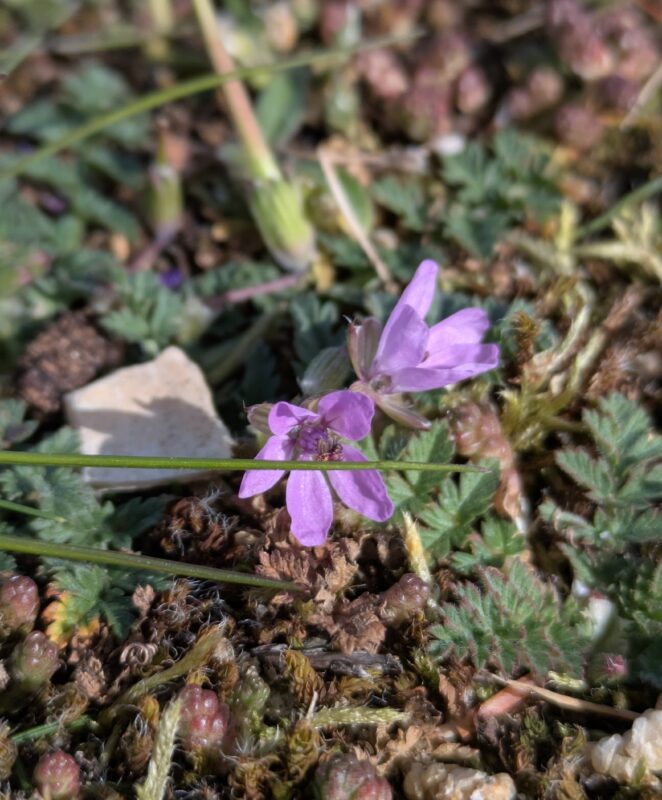
Sea Stork’s-Bill. Seasalter. April 12 2026.
As tiny as the Sea Kale is grand, the humble Sea Stork’s-Bill is a shyer denizen of shingle beaches. A relative of the larger and more familiar Crane’s-Bills, this little plant hunkers close the ground, its pinkish purple flowers creating a jewelled effect among the stones and sand. You’ll need to get down on hands and knees to see it properly.
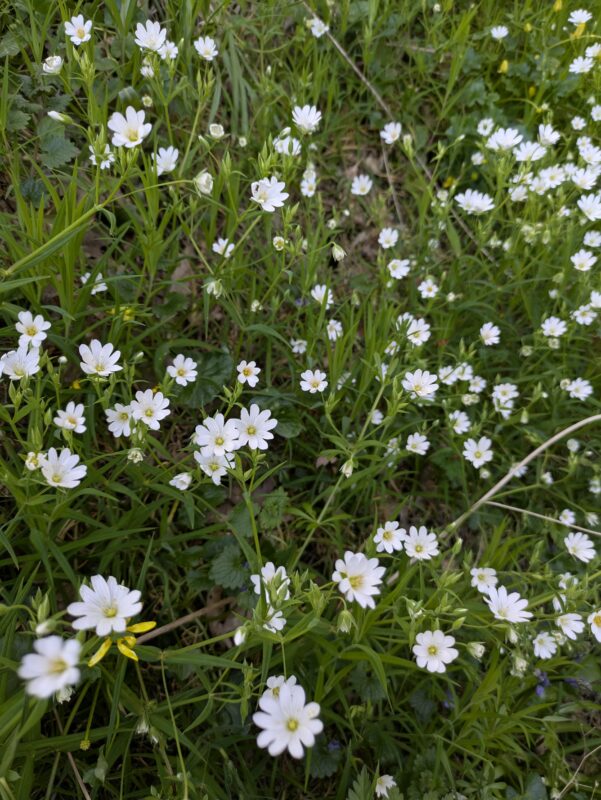
Stitchwort. Painters Forstal. April 6 2026.
Inland, a hedgerow favourite sometimes overlooked among more photogenic swathes of Bluebells, is the white-flowered Stitchwort. The flowers are stars formed of five petals, each deeply lobed to give the impression of ten. It’s a plant rich in folklore, long associated with elves and pixies and with medicinal qualities (its flowers traditionally chewed to combat muscular stitches and other sharp pain).
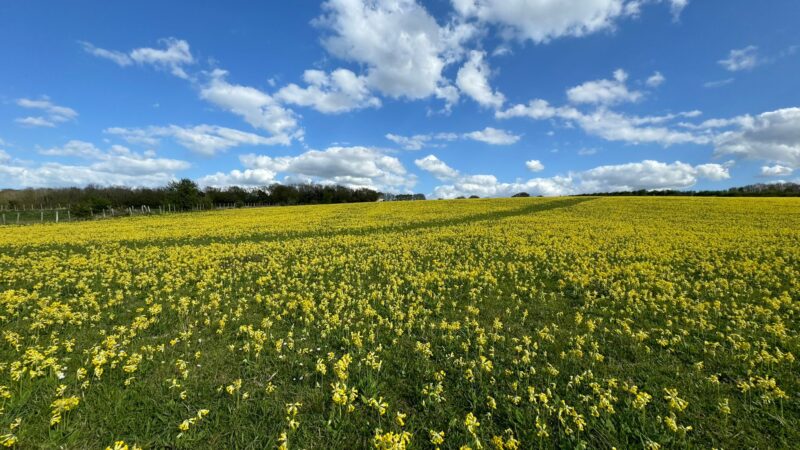
Cowslips. Painters Forstal. April 18 2026.
The cowslip field below Painter’s Forstal becomes more densely flowered every year, thanks to careful management of its grazing. This magnificent carpet exudes a delicious fragrance as the flowers are warmed by the sun. It’s hard to describe, with its warm citrus and apricot notes (though some have likened it to the scent of plasticene!)
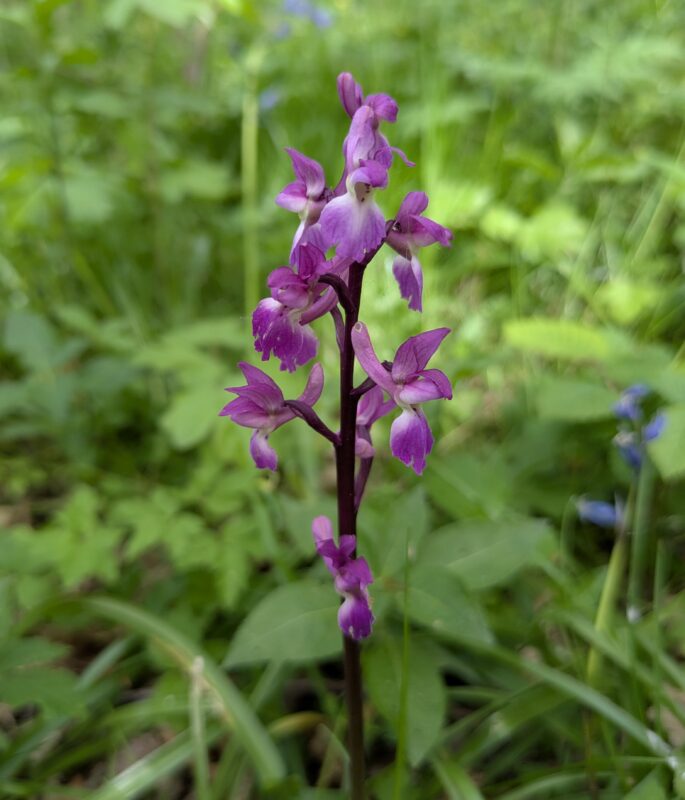
Early Purple Orchid. Square Wood, Painters Forstal. April 26 2026.
Among those who like to keep notes, the Early Purple Orchid is a useful indicator of the arrival of spring. With instantly recognisable spikes, it demands to be noticed among the greenery of Bluebell leaves or Dog’s Mercury. This year, full flowers had opened by April 5th, whereas in the previous five years they hadn’t been noticeable before the 10th or even the 15th of the month. This is not exact science (it rather depends on when this particular recorder gets out for a stroll) but it does seem to confirm the general impression that spring is getting earlier by the year.
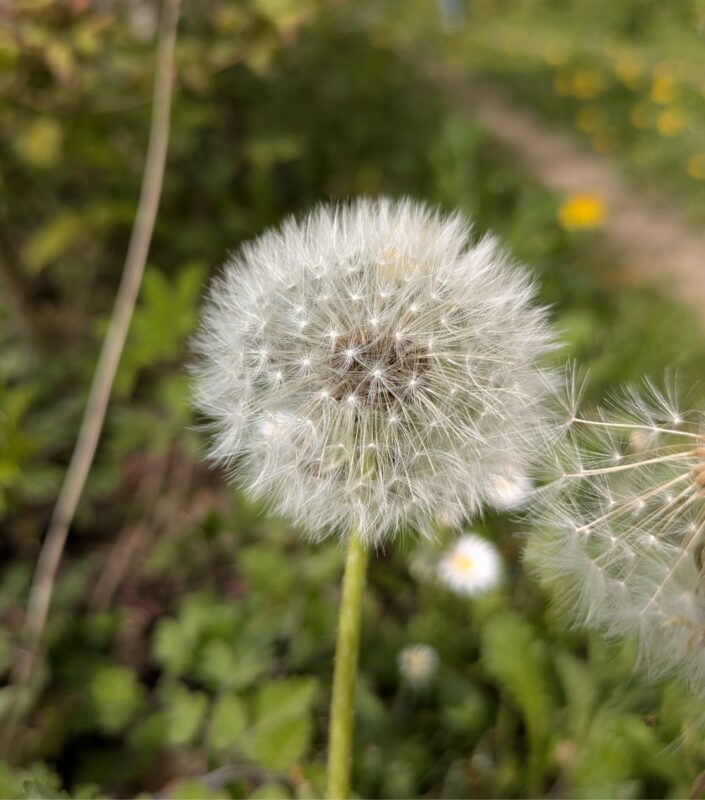
Dandelion. Square Wood, Painters Forstal. April 26 2026.
Dandelions deserve more attention. Vigorous champions of disturbed ground and churned up verges, their reputation has been tarnished by lawn-mad British gardeners who regard it as a public nuisance. In fact there is no single ‘dandelion’: there are, amazingly, more than two hundred British species, with as many as a hundred occupying a single locale. For this alone, perhaps, they deserve the respect given them by recorders in the botanical disciplines. More than one full-length field-guide to their identification has been published in recent years.
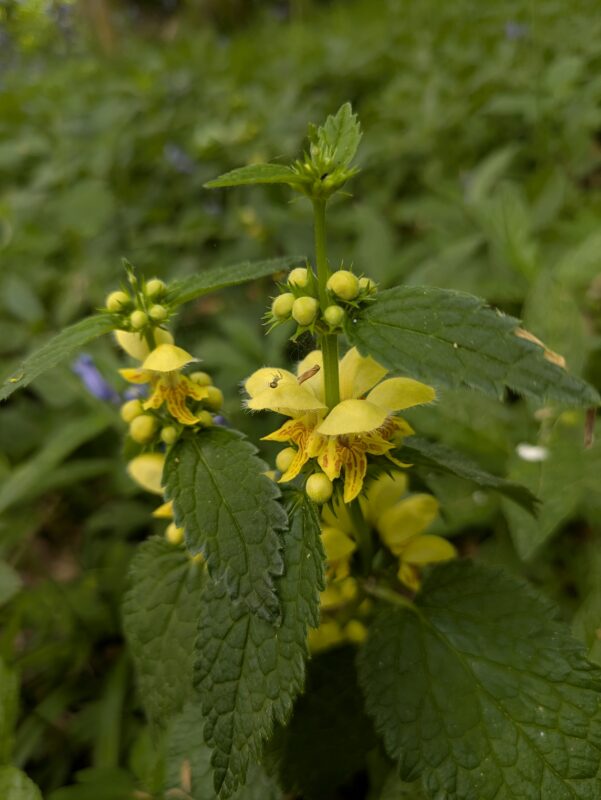
Yellow Archangel. Square Wood, Painters Forstal. April 26 2026.
The fabulously-named Yellow Archangel (after its undeniably angelic flower form) bursts into bloom just as woodland bluebells are fading. It’s definitely worth getting down to ground level to peer into their heavenly faces, with their flame-like markings attracting all manner of insect life (and lurking spiders in search of easy prey).
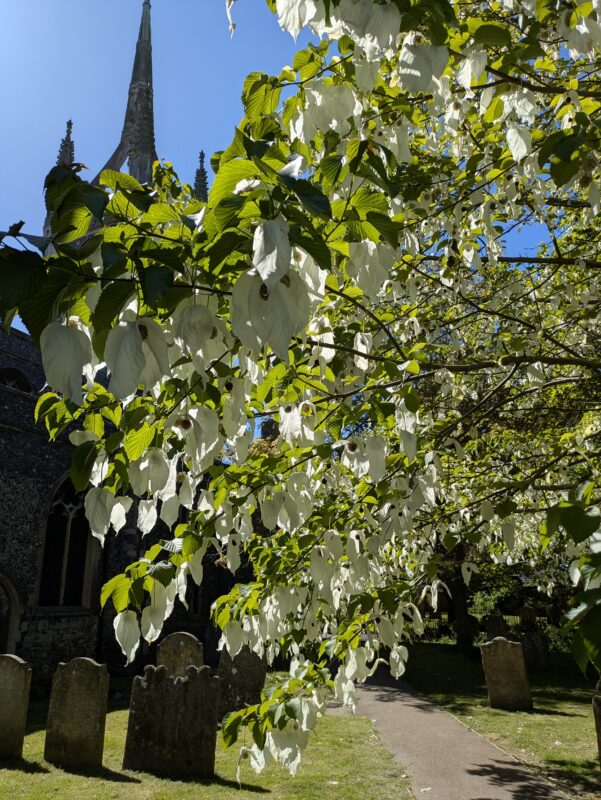
Handkerchief Tree. Churchyard, St Mary of Charity, Faversham. April 27 2026.
Back in town, there is much to delight the observant. Wallflowers have made an especially strong showing (have a look at the old priory walls at the the top of Davington Hill) but best of all has been the magnificent Handkerchief Tree blooming against blue skies in the churchyard of St. Mary of Charity. Its flowers are arranged densely along the branches, with papery white bracts (not true petals) hanging down like freshly laundered pocket handkerchiefs This is not, of course, a native British tree, but one introduced from China in the early twentieth century by the plant hunter Ernest Wilson. Despite being a relative newcomer it has taken its place as one of the highlights among Faversham’s wonderful trees.
Spring continues apace, with welcome rain this week bringing a pause in its headlong rush towards summer, and there are many more botanical treats in store.