Faversham Life
Faversham Life
Words Amicia de Moubray Photographs Amicia de Moubray
I suspect that those of a scholarly antiquarian bent have long traipsed up the sloping path leading to the church of St Peter and St Paul in Lynsted. Inside awaits a delicious feast of stupendous monuments to 17th century members of the Hugessen and Roper families and also a remarkable collection of 18 hatchments.
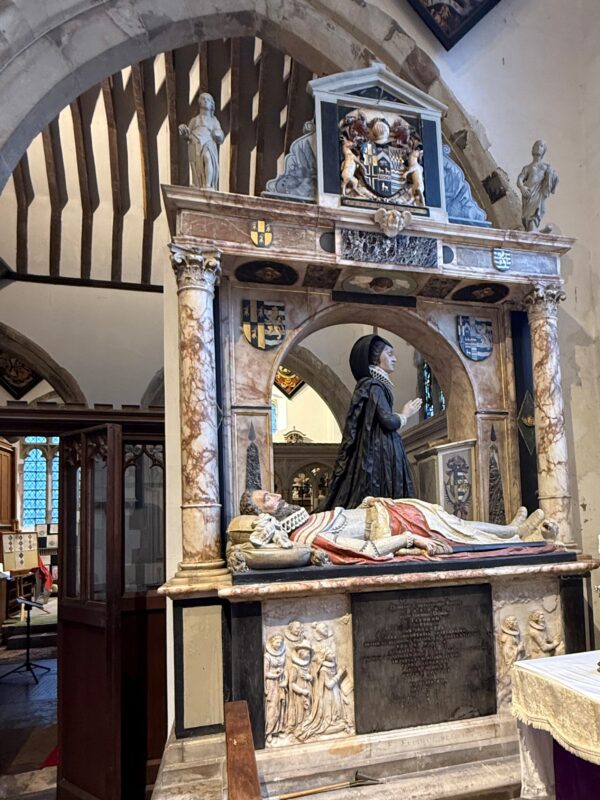
Fine tomb by Epiphanius Evesham in memory of Christopher, 2nd Lord Teynham and his wife, Catherine. Lynsted Church, Kent
Funerary hatchments depict the deceased heraldic achievements on a black ground and were traditionally hung on the wall of the deceased person’s house before being transferred to the parish church often within the family chapel as is the case at Lynsted.
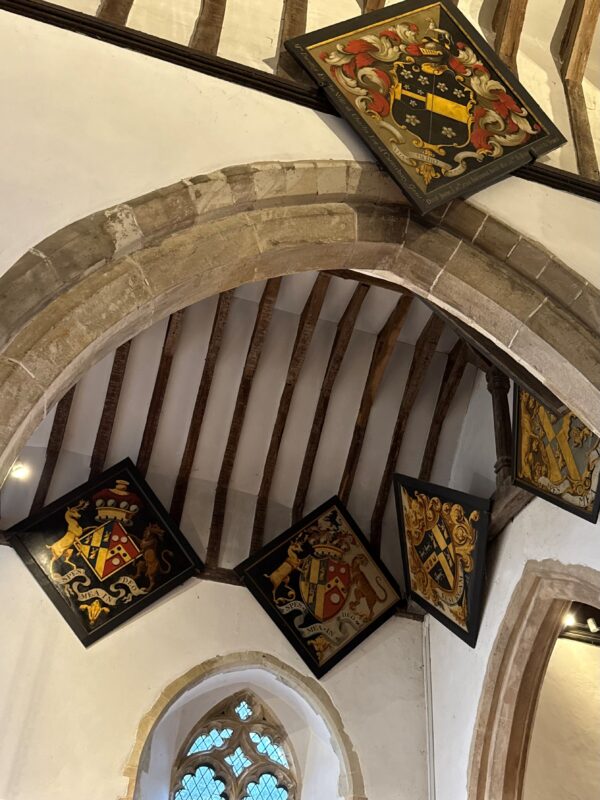
A few of the fine collection of hatchments to be found in Lynsted Church
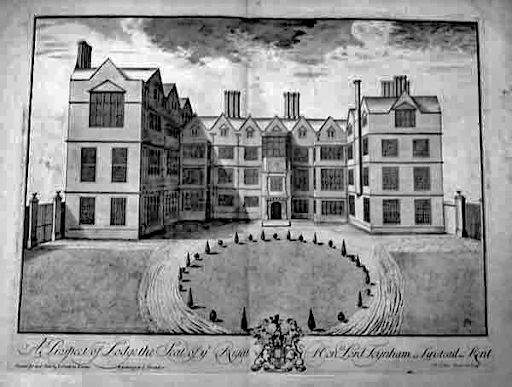
The history of Lynsted is entwined with Lynsted Lodge, subsequently Lynsted Park – until the mid 20th century the ancestral home of the Roper family. A handsome looking four-storey house, it was built by Sir John Roper in 1599. It was much altered in 1829 and today only the central part survives.
Records of the Ropers date back to the 13th century. In 1377 John Roper lent £40 to furnish a fleet against the French. Another Roper of Swalecliffe acquired West Hall, Elham by marriage and his son married Margaret, the daughter of Sir Thomas Moore, the Lord Chancellor. Moore was executed in July 1535. His daughter bribed the executioner to drop his head onto a barge and it was taken to a house called Bumpit (still extant) in Lynsted. Eventually it was transferred to St Dunstan’s in Canterbury where it is still.
The Roper chapel is also interesting in that it demonstrates the fact that from the late 16th century Catholics were not admitted to the nave but had to enter by a little door on the side of the church and worship in a side chapel.
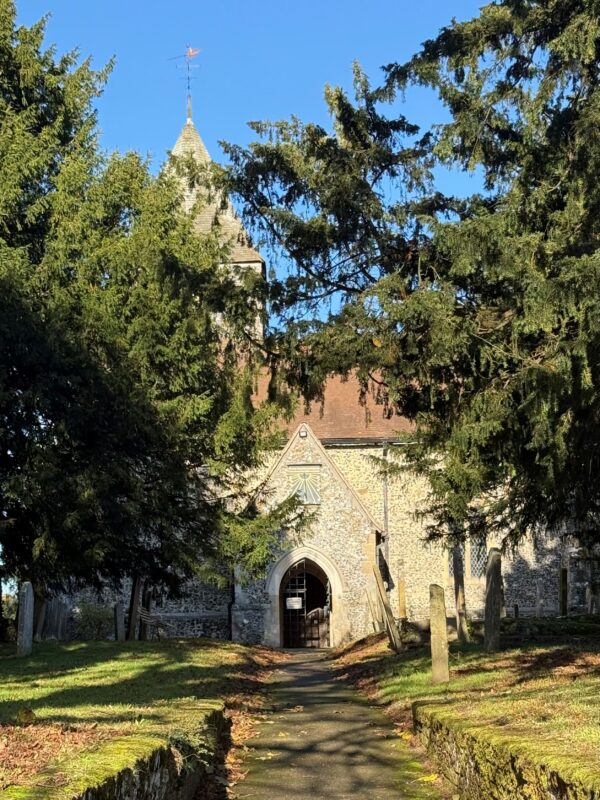
St Peter and St Paul, Lynsted, Kent
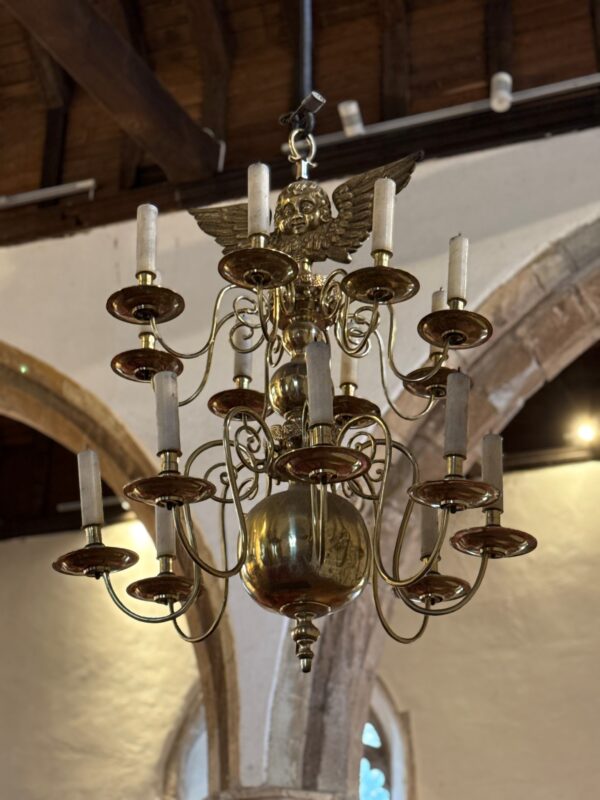
A 17th century chandelier, one of the earliest to be found in any church in Kent
The Roper tombs are fascinating particularly that of Christopher, second Baron Teynham. His wife Catherine commissioned the tomb from the delightfully named Epiphanius Evesham after his death in 1622 but before her death in 1625. This explains why she is represented on the monument as still living in a widow’s hood, kneeling bolt upright, in prayer before a prie dieu with an open book lying on it. ‘Her noble face, strained with the effort of keeping back her grief, is framed by the backward-sweeping loop of her widow’s hood – and one can’t take one’s eyes from it,’ writes John Newman in Pevsner.
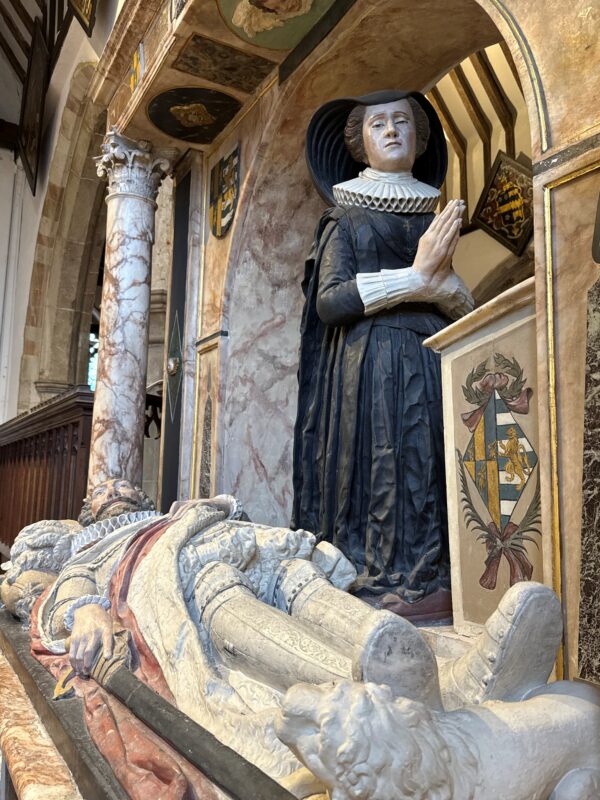
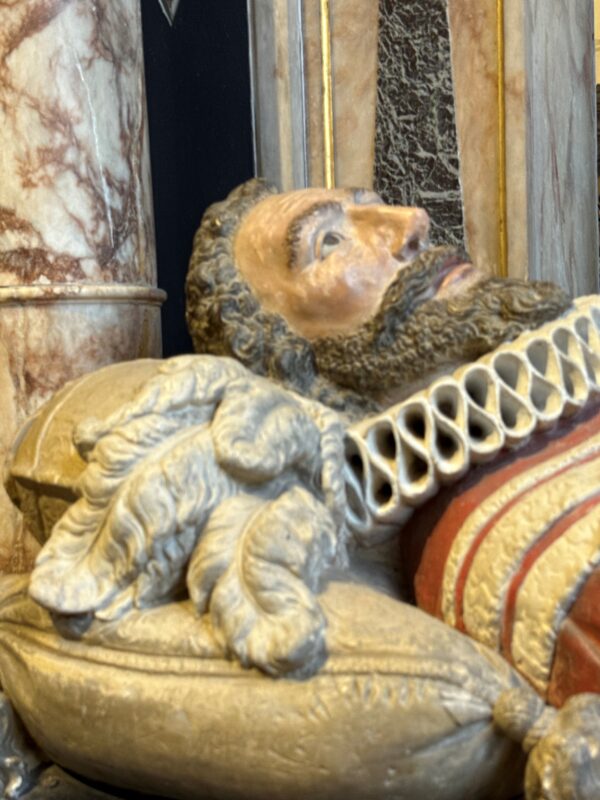
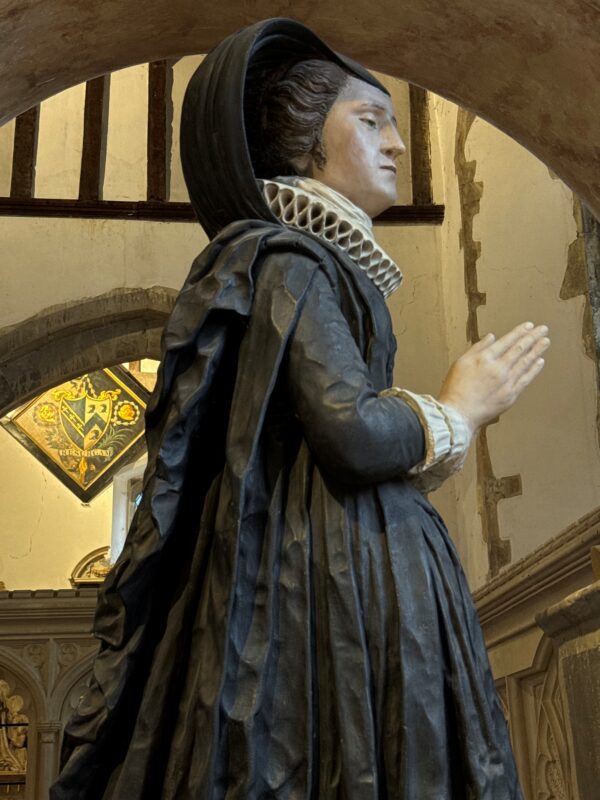
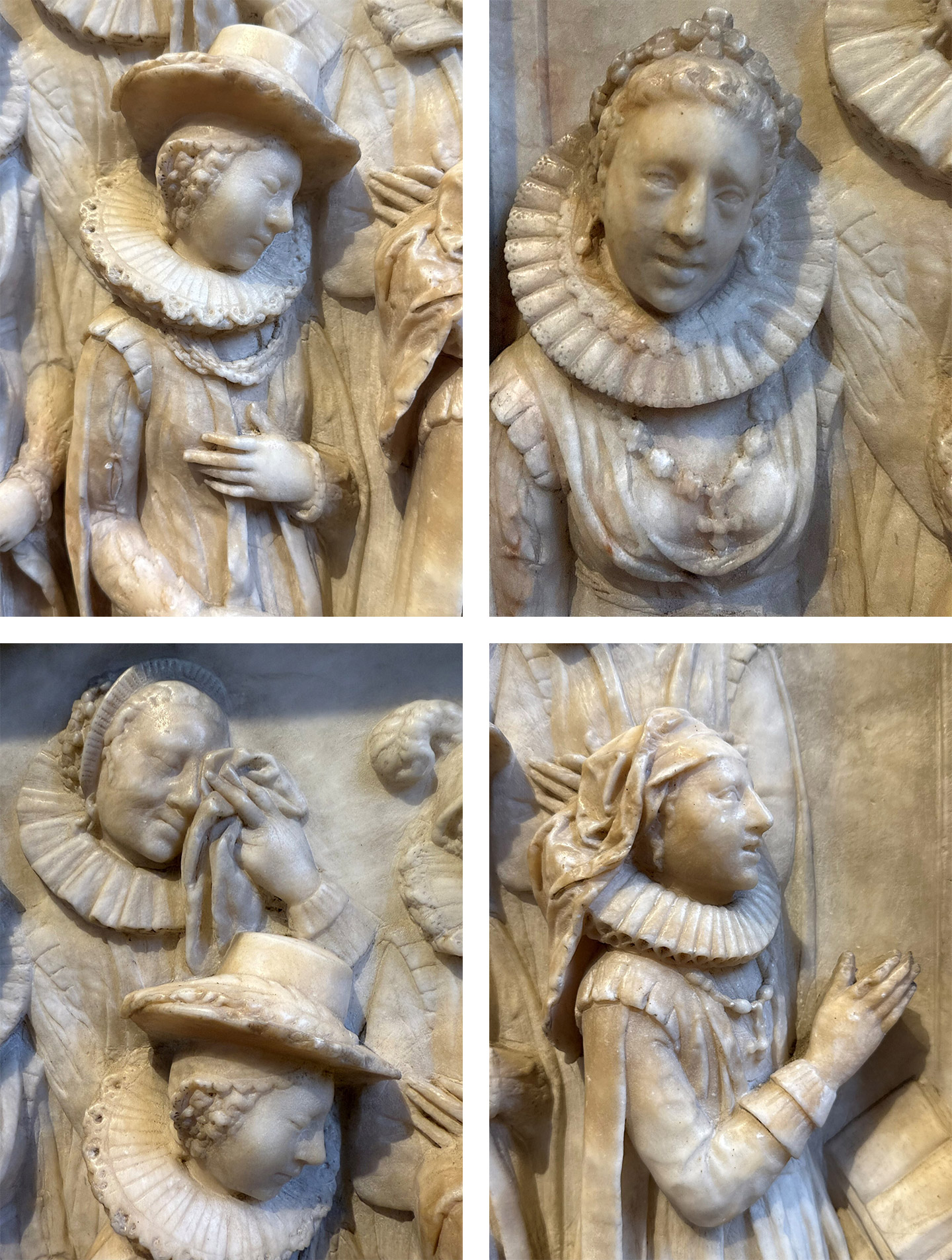
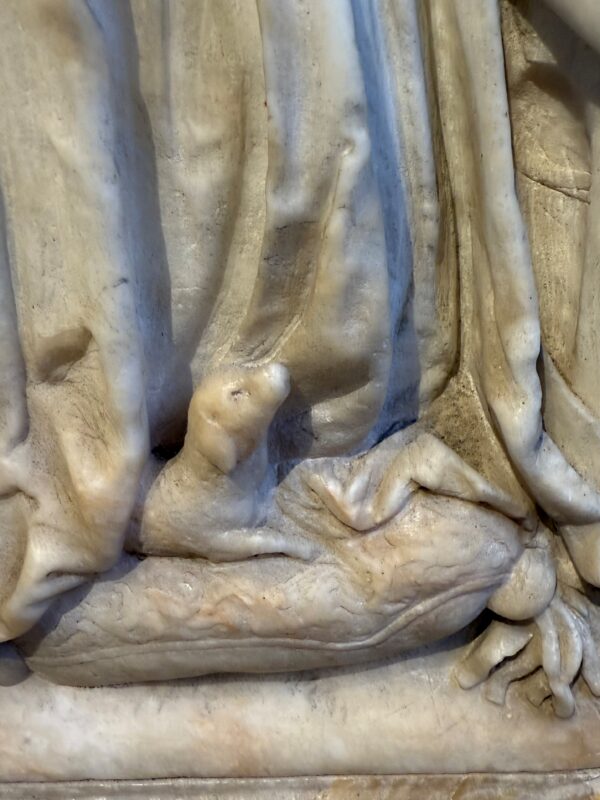
Below are two superbly sculpted alabaster panels of the couple’s children complete with their pet dogs (although one has sadly lost its head). Note the rosaries worn by some of the daughters.
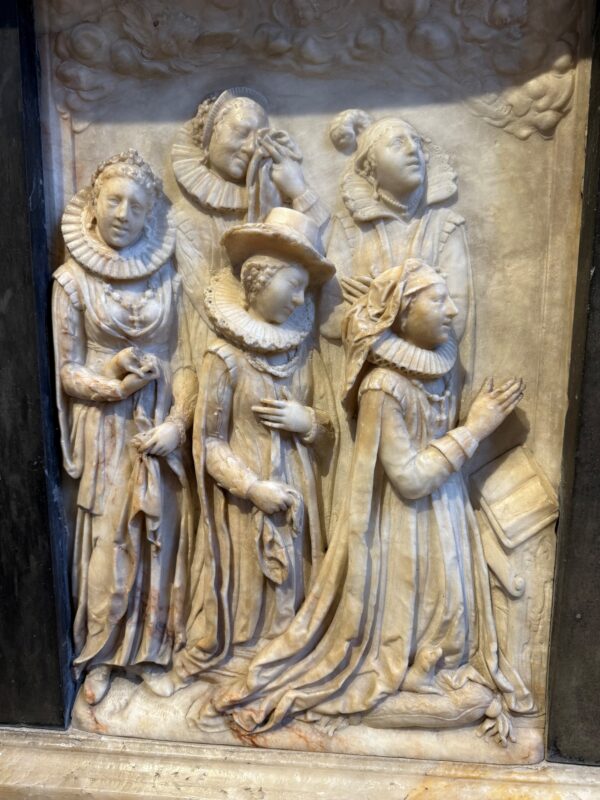
The five grieving daughters of Christopher, 2nd Baron Teynham. Mary Roper (bottom right) kneeling with her hands in prayer, ended her life as the Abbess of a Benedictine convent in Ghent
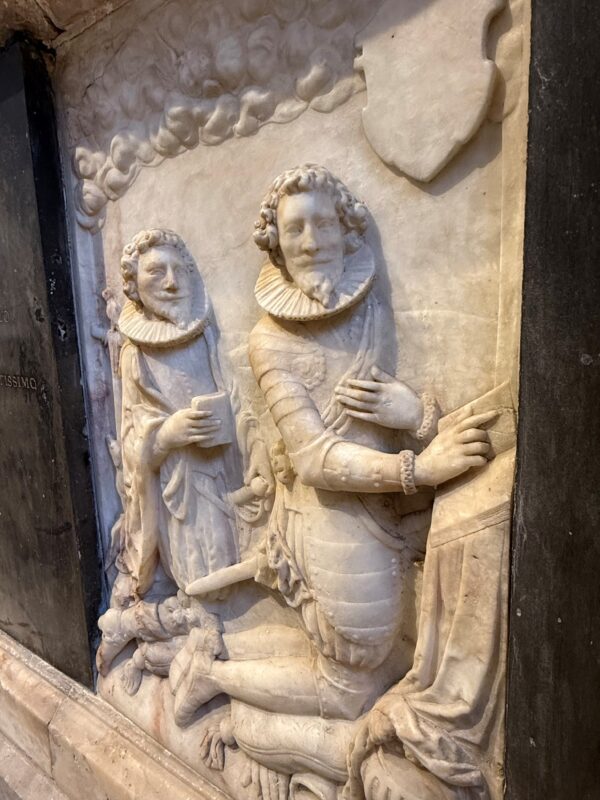
The two sons of Christopher, 2nd Baron Teynham
Described as ‘that most exquisite artist’ by George Vertue, the noted 18th century antiquarian, Epiphanius Evesham was born in 1570 the youngest of 14 children possibly on the feast of Epiphany. By 1600, he was working in Paris in the studio of Mathieu Jacquet. On his return to England, he concentrated on memorial and tomb sculptures. There is another fine example of his work in Otterden Church (see 2019 article inFaversham Life). The Hugessens north chapel has more splendid tombs, notably that of John Hugessen 1634, and James Hugessen 1646.
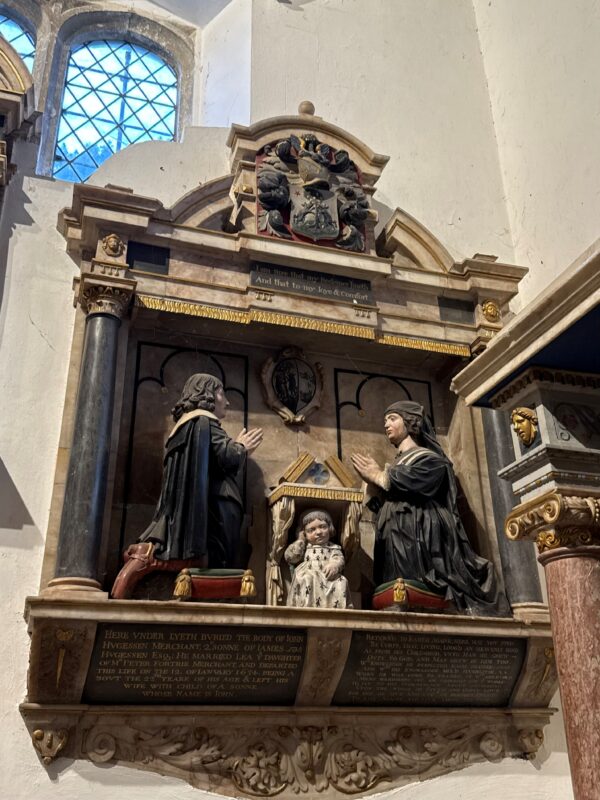
Monument to John Hugessen 1634. His son is peeping out from under the prayer desk
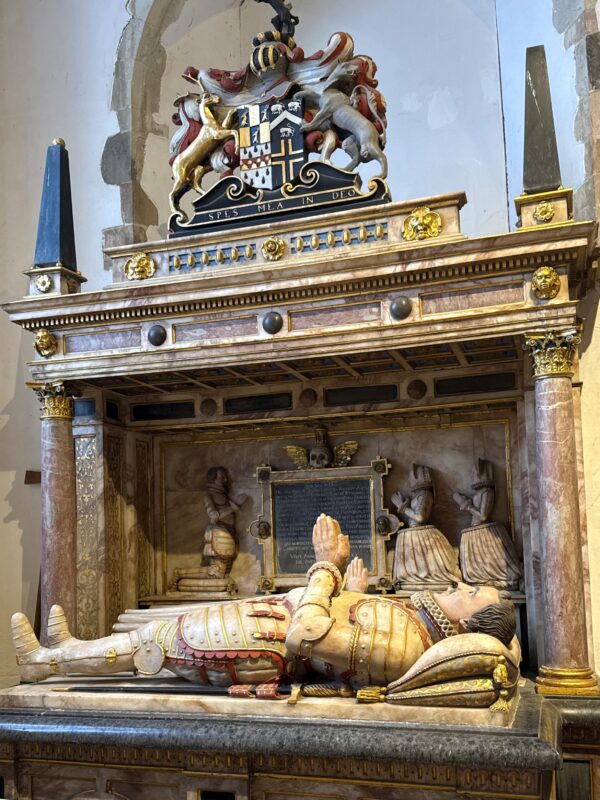
James Hugessen 1646
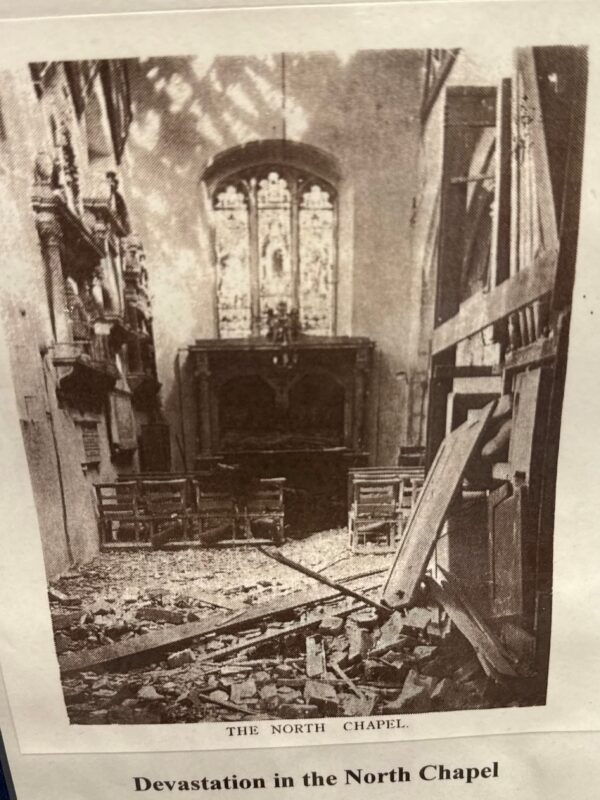
The church dates in part from the 12th century, but was substantially rebuilt in the 13th and 14th centuries and then, like so many other churches, was Victorianised. Luckily it was not destroyed in 1940 when a bomb fell through the roof into the north aisle.
Lynsted a small village, a few miles from Faversham retains at its core a picturesque cluster of ancient Kentish timber framed cottages. It is well worth seeking out.
Text: Amicia de Moubray. Photographs: Amicia de Moubray